

















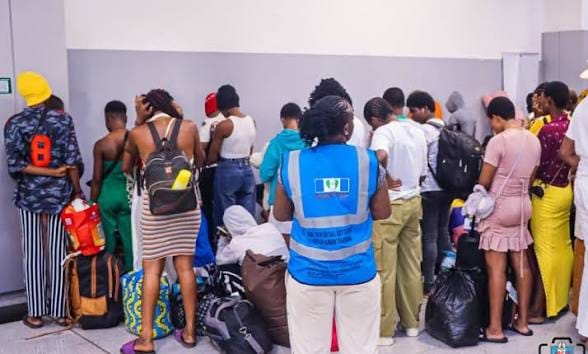
The Centre for Legal Orientation and Humanitarian Aid Initiative (CELOHA Nigeria) and the West Africa Network for the Protection of Children (WAN) have called for stronger collaboration among governments, security agencies, technology companies and communities to combat human trafficking and the growing threat of online exploitation.
The organisations made the call in a statement issued on Thursday to mark the 2026 World Day Against Trafficking in Persons, observed under the global theme, “Trapped Behind the Scam.”
According to the statement, traffickers are increasingly using fake job offers, fraudulent recruitment schemes, romance scams, deceptive education opportunities and other online platforms to lure and exploit vulnerable people.
The groups expressed concern that across West Africa, especially in Nigeria, criminal networks have adapted to the digital age by using social media, messaging applications and fake employment agencies to target children, young people, women and economically disadvantaged communities.
They noted that many victims are deceived with promises of education, employment, sports scholarships, migration opportunities or financial assistance, only to end up in forced labour, sexual exploitation, domestic servitude, forced begging, cyber-enabled exploitation and other forms of abuse.
The statement added that trafficking networks continue to exploit porous borders, economic hardship, conflict, displacement, climate-related migration and limited access to education and decent jobs across the ECOWAS region.
CELOHA Nigeria and WAN warned that advances in technology have expanded the reach of organised trafficking networks, allowing criminals to recruit victims remotely through fake websites, online advertisements and false digital identities.
The organisations urged governments and stakeholders to strengthen the enforcement of anti-trafficking laws, improve child protection systems and increase support for survivors.
They also called for greater investment in digital literacy and online safety education for children and young people, stronger cross-border cooperation among ECOWAS member states, and closer collaboration between governments, internet service providers and technology companies to identify and remove trafficking-related online content.
The statement further recommended addressing the root causes of trafficking, including poverty, unemployment, conflict, gender inequality and limited educational opportunities, while expanding public awareness campaigns on fraudulent online recruitment and migration scams.
As a member of the West Africa Network for the Protection of Children, CELOHA Nigeria reaffirmed its commitment to strengthening cross-border child protection systems, supporting family tracing and reunification, promoting safe migration and protecting the rights of children on the move.
The organisations said, “On this World Day Against Trafficking in Persons, we remind governments and citizens alike that behind every scam is a human life, often a child or young person whose dreams have been stolen through deception and exploitation. Ending trafficking requires vigilance, collaboration, accountability, and sustained investment in prevention and protection.”
They added, “Together, we can expose the scams, dismantle trafficking networks, protect vulnerable communities, and ensure that every child and young person can grow up in safety, freedom, and dignity.”