























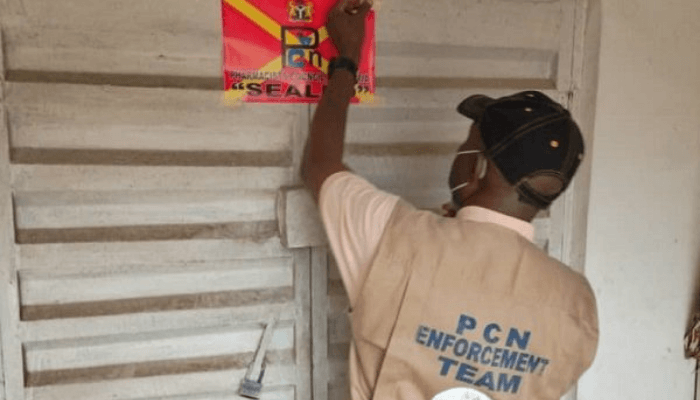
The Pharmacy Council of Nigeria (PCN) has sealed 471 pharmaceutical and patent medicine outlets for violating pharmaceutical practice rules across parts of Edo State.
Registrar of PCN, Ibrahim Babashehu Ahmed, confirmed the closures after the Council’s one-week monitoring exercise in Edo South Senatorial District.
According to him, the operations covered Oredo, Ikpoba-Okha, Ovia North-East, Egor, and Uhunmwonde local government areas within Edo South.
Speaking during a press briefing in Benin on Friday to mark World Pharmacists Day, Ahmed, represented by PCN Head of Enforcement, Dr. Suleiman Chiroma, said the Council would maintain its focus on Practice, Premises, and Personnel in regulating pharmaceutical services nationwide.
He explained, “A total of 743 premises, comprising 196 pharmacies and 547 patent medicine stores, were inspected. One individual was arrested for obstructing PCN inspectors in the discharge of their duties.
“Consequently, a total of 471 premises were sealed for contravening relevant regulations, including 77 pharmacies, 174 patent medicine stores, and 220 unlicensed shops. Furthermore, four premises were served with compliance directives, necessitating corrective actions to address identified non-compliances.”
He added that the enforcement revealed various breaches, including operation of unregistered outlets, failure to renew licenses, unauthorised clinical practices, unlawful access to controlled drugs, stockpiling beyond approved limits in the Patent Medicine List, training apprentices, and wholesalers engaging in retail sales against licensing terms.
He stressed, “The enforcement of the National Drug Distribution Guidelines is a statutory responsibility entrusted to the Pharmacy Council of Nigeria, aimed at ensuring the availability of safe and efficacious medicines nationwide.
“The pharmaceutical sector in Nigeria has been bedevilled by numerous challenges, including chaotic drug distribution networks, proliferation of unlicensed and illegal pharmaceutical premises, and unauthorised handling of medicinal products, thereby necessitating stringent regulatory measures.
“Key areas of emphasis include ensuring compliance with established codes of conduct and professional standards, the maintenance of controlled environments to safeguard the quality and potency of medicinal products, and assessing the competency levels of personnel involved in pharmaceutical practice to ensure they meet the required standards.
The PCN urged residents of Edo State and the wider public to be cautious when purchasing medicines, stressing the need to buy only from licensed and qualified outlets to safeguard their health.