






















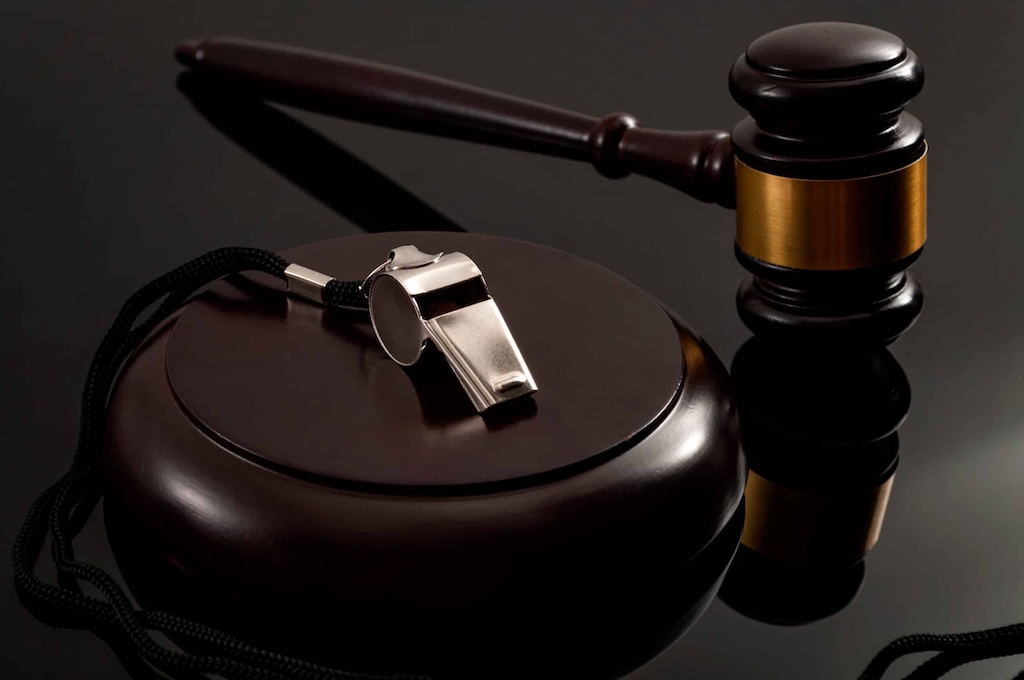
The National Human Rights Commission (NHRC) has urged the judiciary to provide stronger safeguards for whistleblowers, describing them as vital in combating corruption.
At the First National Interactive Forum on Whistleblowing and Whistleblower Protection for Federal High Court judges in Abuja, NHRC’s Director of Economic, Social and Cultural Rights, Harry Obe, emphasized that the judiciary’s duty extends beyond mere interpretation of laws.
“As an Interpreter, Protector and Enforcer, the courts must give life to vague provisions, grant injunctions to stop retaliation, order reinstatements and award substantial damages,” he said.
He added that whistleblowing should not be seen only as a governance mechanism but also as an issue of fundamental human rights.
“Every Naira stolen is a hospital bed empty, a classroom roofless, a road unmade, and a justice system compromised,” he noted.
Also speaking, Dr. Chido Onumah, coordinator of AFRICMIL, pointed out that judges had been noticeably absent in discussions around whistleblowing.
“This is not just an opportunity to reflect, it is a chance to recommit ourselves to building a culture where truth is protected and not punished,” he said.
Representing the Chief Judge of the Federal High Court, Justice Dorcas Venenge Agishi remarked that courts must stand as havens for whistleblowers.
“Our role as judges is to be the final bastion of justice,” she said, stressing that the judiciary bore a “profound responsibility to ensure that our courts are a safe refuge for such persons.”
Danilo Campisi, deputy country representative of the United Nations Office on Drugs and Crime (UNODC), stated that protecting whistleblowers remains one of the most effective ways to fight corruption.
“A robust reporting and protection system is not only a cornerstone of the fight against corruption, it is essential to institutional accountability,” he explained.
Campisi further observed that while Nigeria’s 2016 whistleblower policy achieved some gains, the absence of a comprehensive Whistleblower Protection Act and a strong Witness Protection Bill continues to leave informants at risk.
The forum, organized by AFRICMIL in collaboration with Tap Initiatives, NHRC, CeFTPI and PRIMORG, brought together judges and global partners to map out stronger protections for whistleblowers.