





















Nigeria’s inflation rate dropped to 22.97% in May 2025, the lowest recorded this year, according to fresh data from the National Bureau of Statistics (NBS). This represents a slowdown from the 23.71% recorded in April.
The new figures, released on Monday, show a significant year-on-year drop compared to May 2024 when inflation stood at 33.95%.
On a monthly basis, the inflation rate eased to 1.53%, slightly down from the 1.86% recorded in April, indicating that while prices are still rising, they’re doing so at a slower pace.
NBS attributed the overall inflation trend to changes in the cost of essential goods and services such as food, housing, and transportation.
Food inflation remains a concern
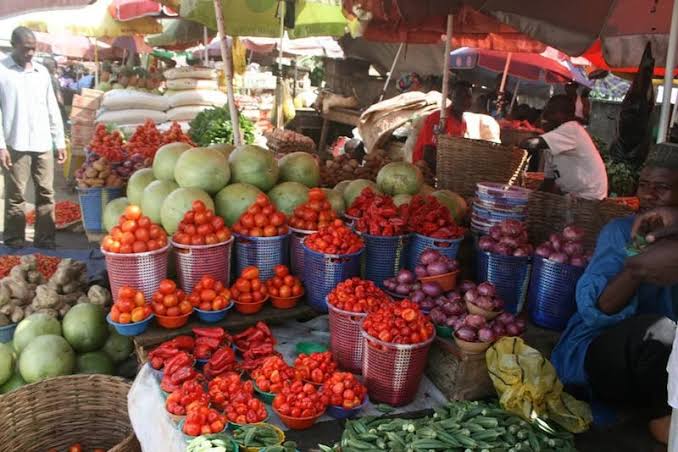
Despite the overall drop in inflation, food prices continue to pressure households.
Food inflation rose to 21.14% year-on-year in May. Month-on-month, the rate increased slightly to 2.19%, up from 2.06% in April.
The bureau listed key food items contributing to this rise as yam, cassava tubers, maize flour, fresh pepper, and sweet potatoes.
However, over a 12-month average, food inflation showed a modest improvement, dropping to 29.80% compared to 34.06% last year.
Some states saw sharper spikes than others. Borno recorded the highest annual food inflation at 64.36%, followed by Bayelsa (39.85%) and Taraba (38.58%). Meanwhile, Katsina (6.90%), Rivers (9.18%), and Kwara (11.31%) had the slowest rates of food price increases.
On a monthly basis, Bayelsa again topped the chart with 12.68%, followed by Cross River (11.15%) and Anambra (9.10%). In contrast, Katsina (-5.42%), Jigawa (-4.02%), and Kaduna (-3.27%) recorded declines in monthly food inflation.