















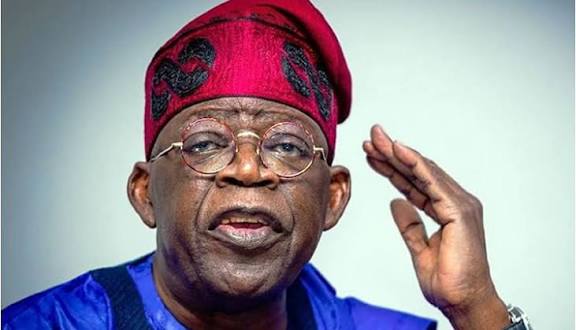
President Bola Ahmed Tinubu has stated that the ₦200 billion intervention fund launched by his administration is designed to assist small businesses and manufacturers in overcoming structural barriers and enhancing their competitiveness.
He explained that the programme is part of government efforts to provide the poor, unemployed, and vulnerable Nigerians with access to grants, loans, and equity financing.
Tinubu made this known on Monday in Abuja during the opening of the 31st Nigerian Economic Summit, where he was represented by Vice President Kashim Shettima.
The president said the fund would create avenues for young Nigerians to expand their businesses, drive innovation, and establish sustainable sources of livelihood.
“Our priority remains restoring hope to the unemployed, the poor, the excluded, and the vulnerable,” he said.
“We created pathways for young Nigerians to access grants, loans, and equity investments of up to $100,000 to scale their enterprises.”
He added that the expansion of digital micro-loans had improved financial inclusion, boosted small businesses, and lifted productivity across local communities.
Tinubu stressed that the government’s economic reforms were delivering outcomes, noting that GDP growth had reached 4.23 percent in September 2025, exceeding expectations.
He credited the achievement to bold measures such as subsidy removal, which, according to him, stabilised public finances and rebuilt investor trust.
“These decisions have rescued our public finances, stabilized the economy, and strengthened investor confidence,” he said.
“We owe this progress to the sacrifices of Nigerians, whose patience remains the foundation of our endurance.”
The president said the economy grew from ₦309.5 trillion in 2023 to ₦372.8 trillion in 2024, while national revenue rose from ₦19.9 trillion to ₦25.2 trillion.
By August 2025, he said, revenue had already hit ₦27.8 trillion, surpassing the ₦18.32 trillion projection.
Tinubu also disclosed that the debt service-to-revenue ratio had dropped from 97 percent to under 50 percent, while non-oil revenue climbed by 411 percent year-on-year, and the tax-to-GDP ratio moved from 7 percent to 13.5 percent.
The stronger fiscal outlook prompted Fitch and Moody’s to raise Nigeria’s credit ratings, a development he said mirrored investor optimism.
He further explained that higher federal allocations to states were part of his administration’s resolve to deepen the federation by granting states more resources and freedom for development.
He pointed to four new Tax Reform Acts intended to boost revenue, reduce dependence on oil, protect low-income earners, and ensure accountability.
“These reforms simplify compliance, promote fairness, and support innovation,” he said. “They are laying the foundation for a fairer and more prosperous Nigeria.”
Minister of Budget and Economic Planning, Senator Atiku Bagudu, hailed the government’s collaboration with the Nigerian Economic Summit Group (NESG), describing it as essential to national advancement.
NESG Chairman, Mr. Olaniyi Yusuf, called on the government to make security a priority, warning that economic reforms could not thrive without peace and safety.
Vice Chairman, Mr. Boye Olusanya, welcomed the government’s economic direction but cautioned that any reversal of policies could undermine growth and derail the ambition of attaining a $1 trillion economy by 2030.
The summit was attended by top government figures including Finance Minister Wale Edun, Trade Minister Jumoke Oduwole, Agriculture Minister Abubakar Kyari, and Communications Minister Bosun Tijjani.