


















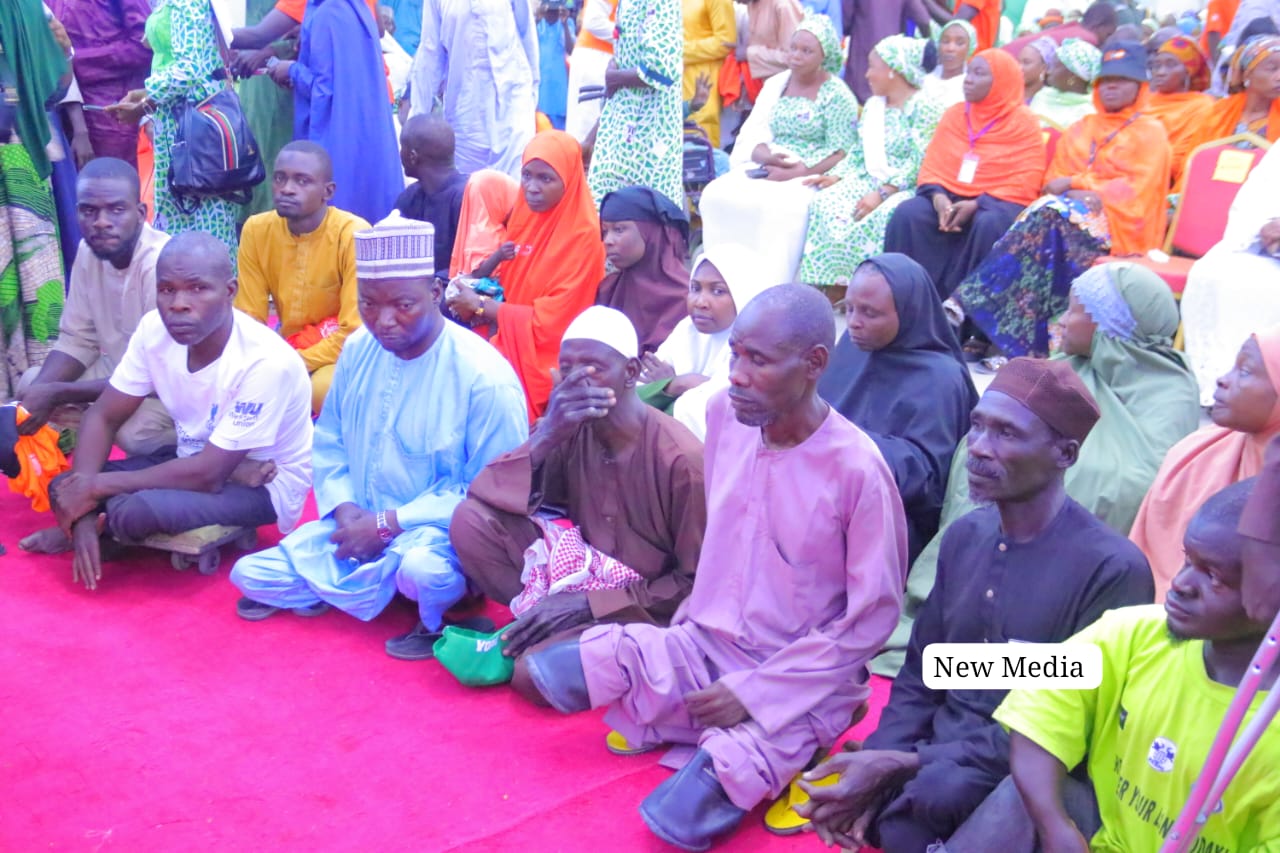
Fatima and Ukasha plan to rebuild their businesses and regain independence. Fatima Jibrin had been selling wrappers in Maiduguri with barely enough capital to keep her shop stocked, and on many days her earnings were just enough to feed her family.
Across town, Ukasha Sulaiman, a shoemaker living with a disability, struggled to buy materials, often watching customers leave because he could not meet demand.
For both, business survival had become a daily battle — until empowerment support arrived during the 2025 International Day of Persons with Disabilities commemoration in Maiduguri.
Fatima and Ukasha each received N200,000 under the Renewed Hope Initiative, a grant they describe as a turning point rather than just financial aid.
“This money gives me a chance to rebuild and expand my business,” Ukasha said, his voice filled with relief and optimism.
“With this amount, I believe I can grow to a point where I may one day support others too,” he added.
Fatima shared similar hope, saying the support restored her confidence, especially as she shoulders family responsibilities.
“We were told to use it for business, and I will do so wisely to sustain myself and my children,” she said.
The empowerment is part of the Renewed Hope Initiative (RHI) rollout across the 36 states and FCT, targeting 9,500 persons with disabilities with N200,000 each.
Beyond the grants, Borno is introducing long-term structural support for artisans with disabilities.
Borno commissioner for women affairs and social development, Hajiya Zuwaira Gambo, announced that land has been allocated for a mechanical and vocational workspace dedicated to PWD artisans.
She said the International Committee of the Red Cross has funded and completed construction of the facility, which will serve welders, mechanics, shoemakers and others who need modern, accessible workspaces.
“This is an investment in sustainability — not just relief,” she emphasized.
UNFPA head of office, Mr. Christian MakoLi, said persons with disabilities, especially women and youth in conflict-affected states, face multiple barriers and require deliberate inclusion.
He called for stronger policies, accessible services and equal participation in economic spaces.
First Lady of Borno, Prof. Falmata Babagana Umara Zulum, urged beneficiaries to turn the support into lasting income streams.
She also announced that the empowerment will now hold annually on December 3 nationwide under RHI.
This year’s theme was “Fostering Disability-Inclusive Societies for Advancing Social Progress.”
For Fatima and Ukasha, the assistance is more than charity — it is a chance to stand independently, rebuild lost stability, and one day empower others as they once hoped someone would empower them.