










Nigeria and Brazil are set to sign a series of landmark business agreements that will restore direct air travel between the two countries and inject fresh investment into Nigeria’s livestock and agriculture sectors.
The deals, scheduled between today and tomorrow, are expected to boost trade, jobs, and connectivity.
In other areas of agriculture, the Green Imperative Partnership (GIP), which kicks off after the visit, is to generate not less than 100,000 direct jobs and more than five million indirect jobs.
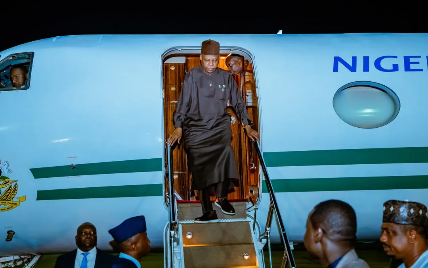
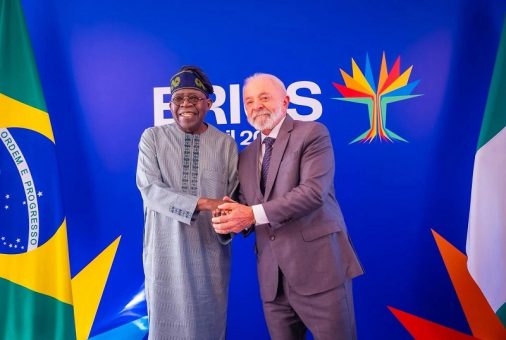
“President Bola Ahmed Tinubu is on a two-day state visit to Brazil on invitation of President Luiz Inácio Lula da Silva to improve on their relationship in trade.”
”This is President Tinubu’s third visit, and the most important, to Brazil in the last one year.”
His first visit was to attend the G-20 meeting, on November 18 and 19, 2024. The second was as an observer at the BRICS Summit on July 6 and 7.
Brazil’s Vice President Geraldo Alckmin visited Nigeria in June and signed some agreements with Vice President Kashim Shettima.
Tinubu flew to Brasilia from Japan where he attended the Tokyo International Conference on African Development (TICAD).
On aviation, the agreement is expected to restore air flights between Rio de Janeiro and Lagos with Brazil national carrier Varig Air and two Nigerian airlines – Air Peace and Caverton.
Report reveals that Minister for Aviation and Aerospace Development Festus Keyamo will sign the agreement on behalf of Nigeria during the summit. In the agriculture sector, an investment by Brazil in Nigeria’s vast and expansive livestock sub-sector will come on stream, and livestock is critical to the agenda of President Tinubu.
To achieve this, he set up the Ministry of Livestock Development so the potential in the area will benefit Nigeria investors and the economy.
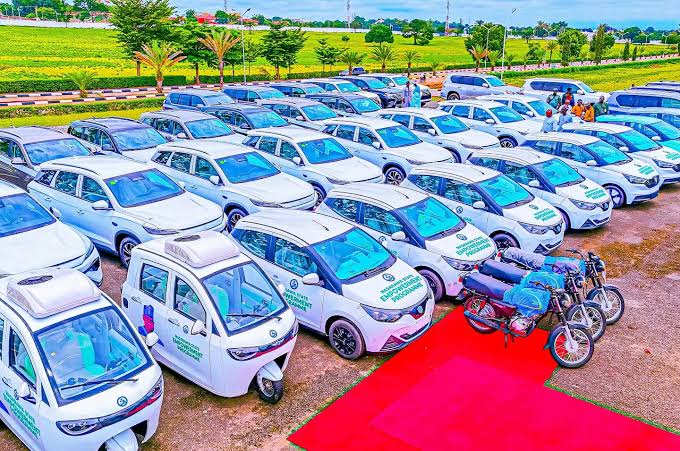
Also in agriculture, Brazil, which is a powerhouse, will make tractors available for farmers to boost food production in Nigeria.
Brazil, being the biggest economy in South America with cultural affiliation to Nigeria, is bidding for investment in Nigeria, with the biggest population, vast arable land and one of the biggest economies in Africa.
Green Imperative Partnership to Boost Jobs, Mechanisation
Special Adviser to the President on Media and Public Affairs Sunday Dare, reflecting on the President’s visit in an article, wrote: “Nigeria and Brazil have signed an economic cooperation with the launch of the Green Imperative Partnership (GIP), a US$1.1 billion initiative aimed at supplying 10,000 tractors and 50,000 pieces of equipment, to be assembled in Nigeria.
“This project is estimated to provide about 100,000 direct jobs and over five million indirect jobs. The programme is anticipated to advance agricultural mechanisation and food security in Nigeria. It is imperative to note that the Green Imperative Agreement was signed during the visit of the Brazilian Foreign Minister, Mauro Viera, in Abuja this year.
“Both (Brazil and Nigeria) are leaders of the Global South with converging aspirations in South–South cooperation.”
The Special Adviser to the President explained that Nigeria and Brazil share both challenges and opportunities that make their partnership strategic. He highlighted that Brazil’s expertise in agricultural mechanisation, when paired with Nigeria’s abundant fertile land, can drive food security and boost productivity. He also stressed the importance of joint innovation in renewable energy and green finance, given the two countries’ shared vulnerabilities to climate change.
He further noted that global trade dynamics are shifting, especially with uncertainty around the renewal of the U.S. AGOA programme, making BRICS-linked trade and currency systems increasingly vital. Beyond trade, Dare pointed to the digital economy as a critical area where both nations can collaborate, particularly in creating jobs and empowering their large youthful populations through technology-driven opportunities.
“Trade between Nigeria and Brazil has experienced sharp swings in recent years. From a high of about US $9 billion a decade ago, bilateral trade fell to just US $1.6 billion in 2023, reflecting underutilised opportunities and shifting global dynamics.
“In 2024, the figure remained under US $2 billion, with Brazil exporting roughly US $970 million worth of goods such as machinery and poultry to Nigeria, while Nigeria’s exports to Brazil stood at about US $920 million, driven by oil, cocoa, urea, and sesame. Brazil’s total imports from Nigeria in 2024 were valued at US $1.17 billion, largely mineral fuels and fertilizers.
“Despite this contraction, the trade balance between the two economies remains relatively even, a sign of mutual complementarity rather than one-sided dependence. Nigeria’s non-oil exports are increasingly finding space in the Brazilian market — in October 2024 alone, Nigeria’s non-oil exports reached US $0.62 billion, with Brazil as the single largest destination, accounting for over 20 per cent of the total.
“This demonstrates that beyond hydrocarbons, sectors like agriculture and agro-processing are already serving as bridges between the two economies, with clear potential for scaling up.
“Looking ahead, both countries have set ambitious targets to revive and expand their trade partnership. At several fora, leaders pledged to push trade back above US $2 billion, with a longer-term goal of reaching US $3.5 billion by 2030.”
The Nation also reported that in the the oil, gas, and aviation sectors, major Brazilian firms like Petrobras and Embraer are considering fresh investments in Nigeria. At the same time, the Bilateral Air Services Agreement (BASA) for a direct flight route between the two nations is set to be finalised, a step expected to significantly enhance connectivity, cut travel costs, and open up new opportunities for trade, tourism, and investment.