











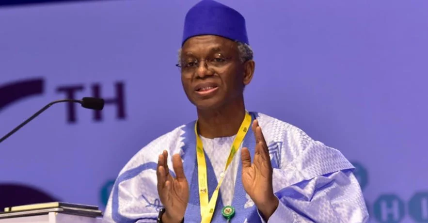








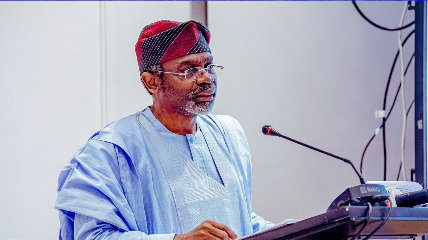
The Presidency has said that public submissions on the proposed National Policing Bill will end by 5 pm on Thursday, August 13, 2026, and has encouraged Nigerians to forward their opinions on the proposed creation of state police.
The Chief of Staff to the President and Chairman of the Presidential Working Group on the National Policing Bill, Femi Gbajabiamila, made this known on Wednesday, explaining that the consultation was intended to capture the experiences and professional knowledge of Nigerians in shaping the proposed law.
He stated that the submissions would be especially helpful in dealing with issues relating to political interference, oversight, police misconduct and intelligence-sharing between federal and state police services.
He explained that the consultation would not take over the constitutional responsibility of the National Assembly, which would still have the authority to examine, amend, reject or pass the Bill when it is eventually transmitted.
Gbajabiamila called on Nigerians to participate in the process, particularly on ways to shield police services from political interference, determine who should investigate serious misconduct and establish how federal and state police forces could exchange intelligence across state boundaries.
He said, “For too long, the debate has been framed as a choice between effective local policing and protection from political abuse. Nigeria needs both.
“We can bring policing closer to the people while building strong national standards, independent oversight and firm safeguards for every citizen. The time to fix policing in Nigeria is now, and we must see the work through.”
Gbajabiamila further emphasised that any proposed state police structure must include strong safeguards to stop governors from using the force against political opponents, protesters, journalists, minority communities and other citizens.
The former Speaker of the House of Representatives noted that although state police could bring law enforcement closer to communities and improve responses to local security challenges, its closeness to state governments created genuine fears of political interference and abuse of power.
He said, “But proximity does not guarantee justice. The concern that governors might use state police against political opponents, minority communities or dissenting voices is serious and must be answered in the design of the law.”
He added that state police services must exercise lawful authority within their jurisdictions while remaining subject to the constitution, human rights and the rule of law.
According to him, the proposed framework should guarantee that police officers are properly recruited, trained, equipped and supervised, while citizens must have access to credible complaint and oversight mechanisms.
Gbajabiamila said the reforms were intended to create a policing system that is “closer, faster and better informed by local conditions,” noting that officers familiar with a community’s language, geography and crime patterns would be better placed to gather intelligence and respond to security threats.
He, however, insisted that the reform must protect citizens from abuse irrespective of their political affiliation.
“The law must protect citizens regardless of who holds office. It must protect opposition parties, peaceful protesters, journalists and minority communities.
“It must make unlawful orders easier to resist, misconduct easier to investigate and political interference harder to hide,” he said.
On the legislative process, Gbajabiamila explained that the constitution presently recognises only one police force, the Nigeria Police Force, under Section 214, making a constitutional amendment necessary before state police can be created.
He said both chambers of the National Assembly had approved proposed constitutional changes to provide for a Federal Police Service and State Police Services, but noted that the process was not yet complete.
According to him, the National Assembly must finish the remaining stages and transmit the amendment to the state Houses of Assembly, where it must secure approval from at least 24 of the 36 state legislatures before it can be forwarded to the President for assent.
He stressed that until those procedures are concluded, state police remains only a proposal.
Gbajabiamila also revealed that the Presidential Working Group is preparing the National Policing Bill alongside the constitutional amendment process.
He said the Bill would set national standards for recruitment, vetting, training, remuneration, pensions, equipment and professional conduct, as well as rules governing the use of force, complaints, discipline, independent oversight, intelligence sharing and cooperation between federal and state police services.
He explained that state police would not automatically take effect across the country even after the constitutional amendment and the National Policing Bill become law.
“Each state that chooses to establish a service will still need its own enabling law, institutions and funding. It must also meet the national conditions for operation before its officers can begin policing,” he said.
Gbajabiamila added that any state that is not prepared to establish its own police service would continue to be policed by the Nigeria Police Force.