



















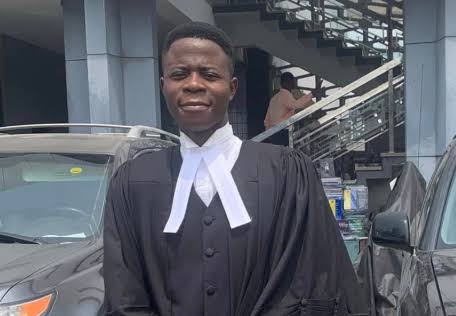
A Lagos-based lawyer, Festus Ogun, has filed a lawsuit against Governor Babajide Sanwo-Olu for blocking him on the social media platform X (formerly Twitter), arguing that the governor’s action infringes on his fundamental rights.
The Lagos human rights lawyer contended that Sanwo-Olu’s decision infringes on his constitutional right to free expression and constitutes censorship by a government official.
Ogun, posting a picture of the lawsuit on Friday, wrote on his official X account: “I have now sued Sanwo-Olu for blocking me on Twitter. I asked the court to compel him to unblock and apologise to me. Truly, I have gone through mental stress and trauma over this matter, but I will not ask for damages, so I won’t be seen as a gold-digger. Just unblock me.”
The charge read, “Fundamental Rights Enforcement Procedure (FREP): Let GOVERNOR OF LAGOS STATE of The Secretariat, Obafemi Awolowo Way, Ikeja, Lagos State, Nigeria, within thirty days after the service of this summons on him, inclusive of the day of such service, cause appearance to be entered for him to this summons which is issued upon the application of FESTUS OGUN of No. 26, Oni Street, Suruiere, Lagos, Nigeria, who seeks the determination of the following questions:
“Whether the literal and/or teleological construction of Sections 37 and 39 of the 1999 Constitution and Article 9 of the African Charter on Human and | Peoples’ Right (Ratification and Enforcement) Act 2004 precludes the | Respondent from blocking the Applicant’s X (formerly “Twitter”) account.”
Under Section 37 of the Nigerian Constitution, an individual’s privacy rights are not necessarily breached simply because they are blocked on X, making such a case difficult to pursue as a standalone legal action in Nigeria.
While a direct lawsuit for being blocked on social media may not be sustainable, there could be legal grounds if the action is linked to a wider infringement of fundamental rights, particularly the right to freedom of expression.
According to a report published by The Guardian Nigeria, it was posited that “a lawsuit is more likely to succeed if the person blocking is a public official, such as a governor, because they have a greater obligation to engage in public discourse and may be violating constitutional rights by doing so.”