















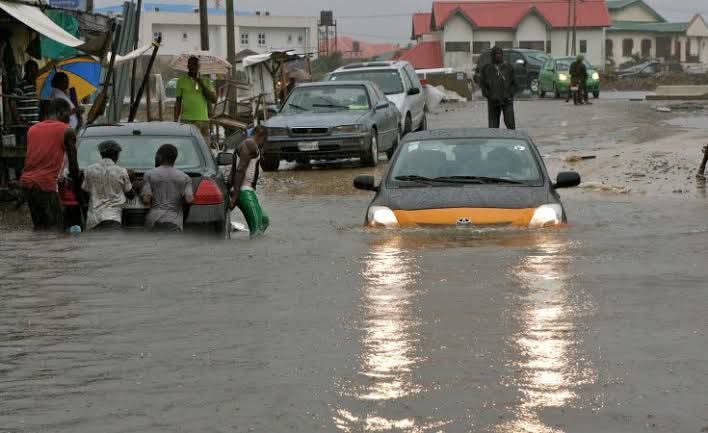
The Kano State Ministry of Environment and Climate Change has reacted to reports on the flooding that hit parts of Kano metropolis on Thursday, September 4, 2025, stressing that the incident is part of the global climate crisis.
The ministry, in statement signed by the Honourable Commissioner, Dr. Dahiru Muhammad Hashim explained that the heavy rainfall witnessed in Kano was both unusual in its intensity and in its duration, with downpours lasting over three hours in many locations.
He attributed this to climate change, noting that rising global temperatures increase atmospheric moisture and contribute to prolonged and heavy rainfall.
“The attention of the Kano State Ministry of Environment and Climate Change has been drawn to reports in the media regarding the unfortunate flooding that occurred across parts of Kano metropolis on Thursday, 5th September 2025.”
Global dimension of the flooding challenge
According to the ministry, the unusually high volume of rain overwhelmed existing drains, while urban expansion, inadequate drainage, and clogged waterways worsened the flooding by reducing natural water absorption.
“This phenomenon is not unique to Kano. Similar incidents have been recorded in other Nigerian cities such as Lagos, Calabar, and Abuja, as well as in major cities across Europe, the United States, and Asia,” the statement read.
The commissioner stressed that the flooding highlights “the global dimension of the climate crisis and the urgent need for cities to adapt to new realities.”
Government’s efforts to build resilience
On steps taken so far, the ministry assured residents that plans for a more resilient metropolis are ongoing.
“At the beginning of the rainy season, all major drains were desilted to ensure free water flow, while self-help groups across the metropolis were supported with working tools to desilt minor drainages,” the statement explained.
It added that the ministry is “strengthening waste management systems to prevent refuse from blocking waterways and is restoring natural buffers such as trees along major roads to enhance water absorption and reduce runoff.”
The statement further disclosed that a major drainage channel is also being constructed at Babangwari roundabout, designed to safely convey more than half of the city’s runoff.
For the long term, the ministry will propose in the 2026 budget “the development of a new drainage master plan for Kano metropolis, as the current system may not adequately withstand future climate-induced rainfall patterns.”
While pledging more government investments in flood resilience, the ministry stressed that public support is critical.
“The cooperation of citizens remains essential. The Ministry urges residents to dispose of waste properly to prevent blockages in drainage systems and to refrain from building on waterways. Such practices endanger lives and property and will not be tolerated,” the commissioner warned.
The Ministry reiterated its commitment to safeguarding Kano metropolis and ensuring the safety of lives and properties against flooding and other climate-related risks.