



















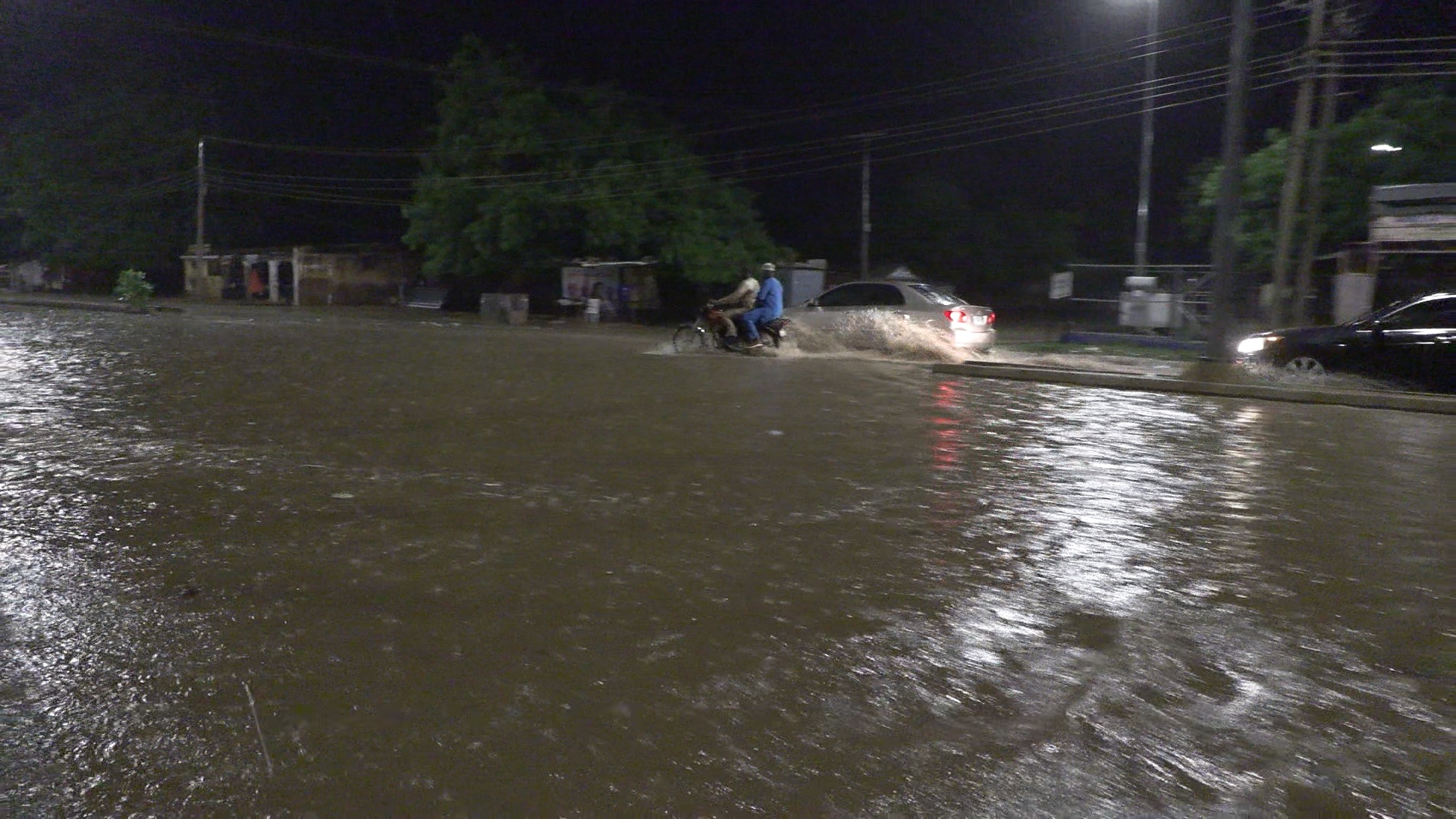
Residents of Dutse, the Jigawa State capital, are counting their losses after a heavy downpour accompanied by a powerful windstorm destroyed more than 200 buildings and caused widespread disruption across the city.
The rain, which started at about 7:00 a.m. on Saturday and lasted for over an hour, triggered flooding in several communities. Homes, schools, markets, places of worship and other public and private facilities were affected, while many roads became impassable due to rising floodwaters.
The windstorm also damaged electricity poles and power lines, plunging many parts of Dutse into darkness for more than 16 hours. The prolonged power outage disrupted commercial activities, affected small businesses and caused inconvenience for residents.
Property worth millions of naira is feared to have been destroyed, although officials are yet to release an official estimate of the total losses.
The Jigawa State Emergency Management Agency (SEMA) said assessment teams have been deployed to evaluate the extent of the destruction and identify affected households.
The agency added that arrangements are being made to provide relief materials and other forms of emergency assistance to victims.
Officials of the Kano Electricity Distribution Company (KEDCO), who spoke on condition of anonymity, said engineers were working to repair damaged electricity infrastructure and restore power supply to affected communities.
However, many parts of Dutse remained without electricity as of the time this report was filed.
The disaster comes at a time when authorities have continued to warn of increased flooding during the 2026 rainy season.
The Nigerian Meteorological Agency (NiMet) has identified 14 local government areas in Jigawa State as being at medium risk of flooding, while more than 100 communities are classified as highly vulnerable.
Similarly, the National Emergency Management Agency (NEMA) has urged residents living in flood-prone areas to take precautionary measures and encouraged state and local authorities to strengthen emergency preparedness and disaster response.
The incident has renewed concerns over the need for improved drainage systems, stronger urban planning and investment in disaster risk management to reduce the impact of extreme weather events.
As the rainy season progresses, experts say proactive measures by both government and residents will be critical to safeguarding lives, property and public infrastructure.