
















The African Democratic Congress (ADC) says it will conclude all coalition discussions in two weeks as part of moves to present a united political front ahead of Nigeria’s 2027 presidential election.
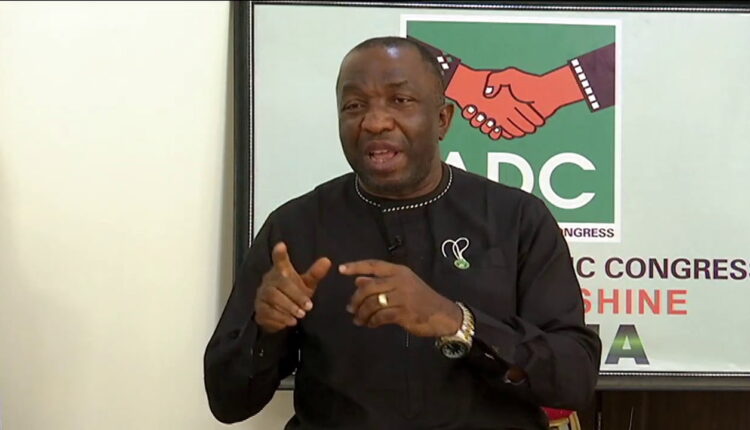
National Chairman of the ADC, Dr. Ralphs Okey Nwosu, made this known during a media briefing over the weekend.
He confirmed that various consultative committees had held meetings with major stakeholders including former Vice President Atiku Abubakar, Labour Party’s Peter Obi, and ex-Kaduna governor Nasir El-Rufai.
According to Nwosu, the coalition effort is being driven on three fronts—direct citizen engagement, collaboration with civil society, and dialogue with political stakeholders.
“We’ve touched the grassroots beyond political talks,” he said, stressing that Nigeria’s dire situation calls for either a citizen’s revolt or a patriotic coalition.
He also disclosed that Dr. Bamidele Jamilu Jade and Dr. Mani Ibrahim Ahmad are leading negotiations with political parties and groups, indicating a multi-layered approach to building consensus.
We’re not a political ‘molue’ – Nwosu warns opportunists
Dismissing claims that the ADC is merely a vehicle for ambitious politicians, Nwosu said the party’s ideology stands for inclusion and transformation—not political expediency.
“In Kaduna last year, we made it clear at the Arewa House Summit that the ADC is not a ‘molue’ bus. If that’s the mindset, they should rethink,” he asserted.
He said such opportunistic tendencies have weakened Nigeria’s democratic system and contributed to the lack of transformative leadership.
He emphasized the importance of moving away from ethnic and regional politics, noting that ADC does not promote divisions like “Deputy Chair North” or “Deputy Chair South,” but instead assigns roles based on function and capacity.
On the question of zoning the coalition’s presidential ticket, Nwosu acknowledged that discussions were ongoing but noted increasing youth agitation around fairness and equity.
Some youths, he said, had pointed out the imbalance in power rotation since 1999.
“Some young Nigerians are looking deeper into the data, and challenging conventional zoning narratives,” he revealed.
With the 2027 elections on the horizon, ADC’s next steps in the coming weeks may define the shape and strength of the emerging opposition coalition.