












Art is emerging as a vital force for social recovery in Borno State, where efforts to rebuild communities now extend beyond physical reconstruction to restoring cultural identity and human capital.
Across North-East Nigeria, local performers are using theatre to share stories of resilience, renew hope, and rebuild social ties among families affected by years of insurgency and unrest.
In alignment with this vision, the United Nations Office on Drugs and Crime (UNODC), through its EU-funded STRIVE Juvenile Project, is collaborating with state governments to advance peacebuilding and child protection using theatre as a vehicle for social transformation.
The project, executed in partnership with the Borno State Ministry of Information and Internal Security and the Councils for Arts and Culture in Adamawa and Yobe States, empowers artists to advocate for the rights and reintegration of children formerly linked to armed and criminal groups.
The programme, titled STARLIGHT (Storytelling Theatre for Advocacy, Resilience and Light in Growing Healthy Tomorrows), gathered artists from Borno and Yobe States for a theatre showcase in Maiduguri from 20 to 24 October at the newly refurbished Open-Air Theatre.
According to participants, they explored storytelling, rhythm, and performance under the mentorship of UNODC’s international theatre consultant Alessandro Ienzi, in Abuja for five days alongside colleagues from Adamawa State, discovering the strength of creative expression to foster empathy and confront social stigma toward children affected by conflict before moving to Maiduguri.
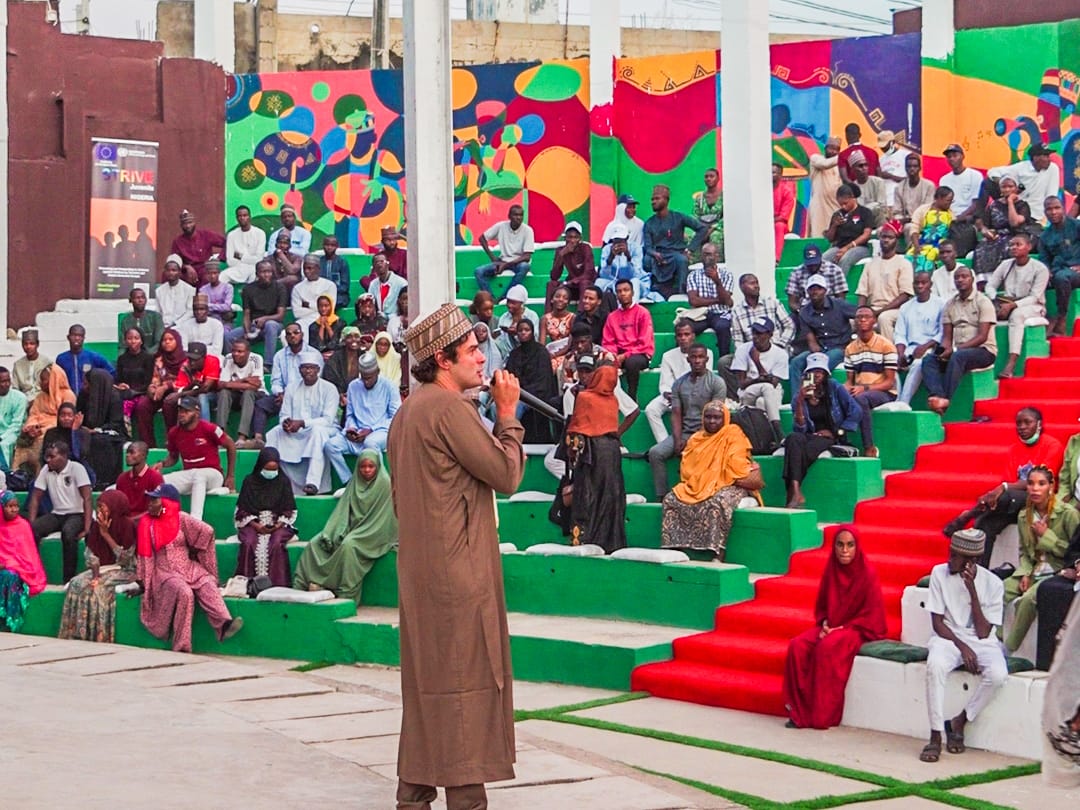
The live performance, “My Story,” attracted residents from across Maiduguri to the rejuvenated Open-Air Theatre, which had once fallen into disrepair but has now been transformed into a vibrant cultural and advocacy hub through the STRIVE Juvenile Project in partnership with the state government.
The renovation generated excitement throughout Maiduguri, with many residents visiting to take photos and celebrate the theatre’s rebirth on social media.
The performance drew an audience of over 400 people and depicted the struggles and resilience of children affected by war.
The event represented not only the revival of a cultural landmark but also a renewed dedication to peacebuilding through artistic expression.
Babagana Mustapha, Executive Director of the Borno State Council for Arts and Culture, who represented the Honourable Commissioner for Information and Internal Security, expressed gratitude to the Executive Governor of Borno State, Professor Babagana Umara Zulum, mni, fnse, for supporting the initiative and to UNODC for reviving the facility.
“This partnership reflects Borno’s determination to rebuild not only our infrastructure but also our spirit.
Through theatre, our people can share stories of resilience, unity, and hope that is the true foundation of lasting peace,” Mustapha said.
Husna Ibrahim, Executive Director, Yobe State Ministry of Home Affairs and Culture, praised the initiative’s long-term vision, noting that the workshop has equipped artists with advanced skills.
“Through the network we built here, we have identified common ground and shared goals. We’ll sustain this partnership for the benefit of our children,” she affirmed.
In a press statement issued on 23 October 2025, Cheikh O. Toure, UNODC Country Representative in Nigeria, highlighted the importance of using culture and creative expression to advance peace and child protection.
“The United Nations Office on Drugs and Crime recognizes that lasting peace and the protection of children can only be achieved when governments, communities and individuals work together through initiatives that speak directly to the heart,” Toure stated.
“Every act of art is an act of peace, and every story told is a step toward healing.”
He commended the collaboration with the Borno State Ministry of Information and Internal Security, noting that the Open-Air Theatre has become “a vibrant platform for dialogue, expression, and advocacy for social change.”
According to the statement, UNODC’s programme began with 10 artists each from Borno, Adamawa and Yobe States on 13 October 2025, and continued with 20 artists from Borno and Yobe in Maiduguri from 20 October 2025. It will conclude with 10 artists from Adamawa in Yola from 27 to 31 October 2025, building on lessons from Abuja and Maiduguri to help participants create community-driven performances that encourage empathy, dialogue, and reintegration.
Through music, movement, and storytelling, the participants will amplify messages of peace and resilience, reaffirming theatre’s value as a medium for healing and collective progress.
Across the three states, the STARLIGHT initiative under the EU-funded STRIVE Juvenile Project stands as evidence of what can be achieved when creativity meets compassion—showing that through art, communities can reclaim their voices, reimagine their futures, and reinforce the ties that unite them.