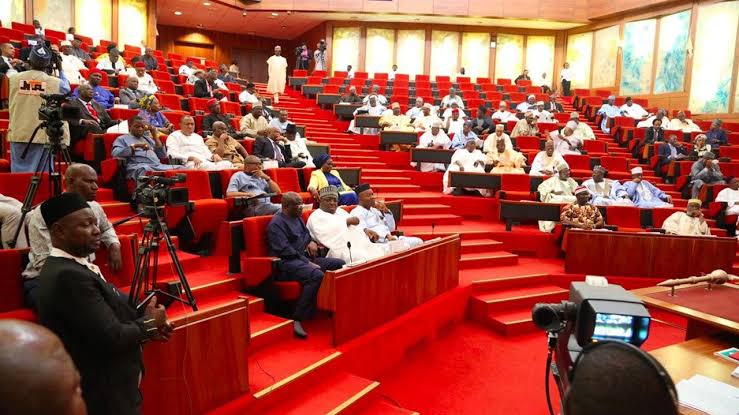























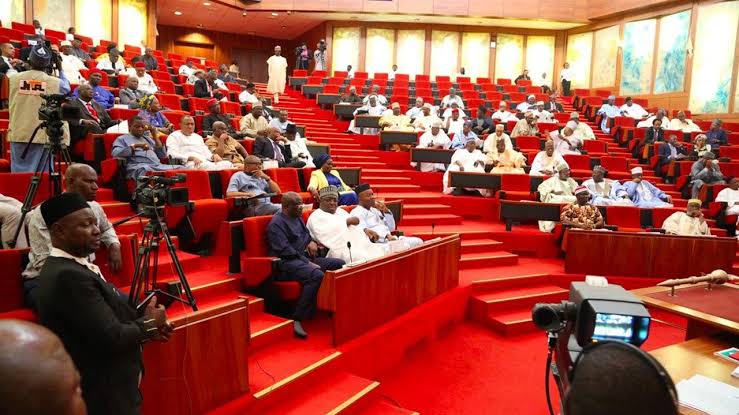
The Senate on Thursday amended the Federal Polytechnic Act, granting federal polytechnics the authority to award Bachelor of Technology (B.Tech. Hons.) degrees in science, engineering and technology-related fields.
The amendment came after the Senate reversed its earlier position on the legislation, which restricted federal polytechnics to awarding the National Diploma (ND) and Higher National Diploma (HND).
Under the revised provision, federal polytechnics can award bachelor’s degrees to holders of ND, HND or Postgraduate Diploma qualifications, provided the programmes receive accreditation from the National Universities Commission (NUC) and other relevant regulatory authorities.
The decision followed a motion sponsored by Senate Leader Opeyemi Bamidele (APC, Ekiti Central) during Thursday’s plenary session.
Bamidele argued that some provisions of sections 2, 8 and 31 of the Act needed additional legislative review and amendments to improve administrative clarity and establish a comprehensive legal framework.
He called on the Senate to recommit the legislation to the Committee of the Whole for further deliberation and necessary amendments.
What the amended law provides
The amendment introduces a new subsection, Section 2(1)(c), authorising federal polytechnics to award Bachelor of Technology (B.Tech. Hons.) degrees in science, engineering and technology programmes to holders of ND, HND or Postgraduate Diploma qualifications.
“Award the Bachelor of Technology (B.Tech. Hons.) degree in Science, Engineering and Technology programmes to holders of the National Diploma (ND), Higher National Diploma (HND) or Postgraduate Diploma, subject to accreditation by the National Universities Commission (NUC) and relevant regulatory bodies,” the section states.
The provision stipulates that the degrees can only be awarded after accreditation by the NUC and other relevant regulatory authorities.
The amendment also changes Section 8, which addresses the appointment and tenure of rectors in federal polytechnics.
Under the revised provision, the governing council of a polytechnic will appoint a rector for an initial five-year term, with the possibility of a second and final term lasting four years.
Furthermore, the amendment modifies Section 31 to redefine a minister as an official responsible for education.
Meanwhile, when the amendment was recommitted to the Committee of the Whole for consideration, no senator objected to the proposed changes.
Senate President Godswill Akpabio subsequently subjected the amended provisions to a voice vote, with the majority of senators voting in support.
Persistent disparity between B.Sc. and HND holders
The difference in the treatment of Bachelor of Science (B.Sc.) degree holders from universities and Higher National Diploma (HND) holders from polytechnics has remained a contentious issue in Nigeria’s education system, particularly regarding employment, remuneration and career advancement.
Despite both qualifications being awarded by tertiary institutions, HND holders have historically encountered restrictions in some public and private sector organisations, including differences in entry-level appointments, promotion opportunities and eligibility for certain positions. The disparity has continued despite successive government policies intended to address the situation.
In the federal civil service, a circular issued by the Office of the Head of the Civil Service of the Federation in March 2018 permitted HND holders to enter the service at Salary Grade Level 08. However, serving officers with HND qualifications are required to satisfy additional conditions under applicable schemes of service and public service regulations to advance beyond Grade Level 14 or convert to the officer cadre.
The issue has also raised concerns about fairness and equal opportunities for graduates with different qualifications. In 2023, the House of Representatives expressed concern over alleged differences in the promotion of HND and degree holders in the Nigeria Security and Civil Defence Corps, calling on relevant authorities to enforce existing directives on the matter.
Successive administrations and the National Assembly have attempted to address the problem through policy reforms and proposed legislation. Nevertheless, continuing disputes over recruitment, promotion and career advancement indicate that official declarations alone may not have completely resolved concerns about the treatment of HND holders.
The extent to which the amendment will reduce discrimination against polytechnic graduates will depend partly on employers’ recognition of the new degrees and whether public service recruitment policies and schemes of service are revised to guarantee fair treatment.