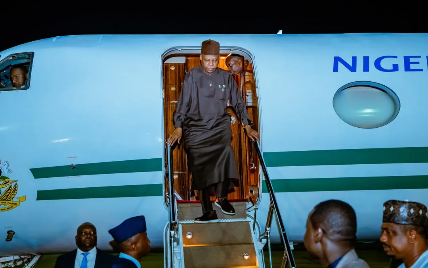












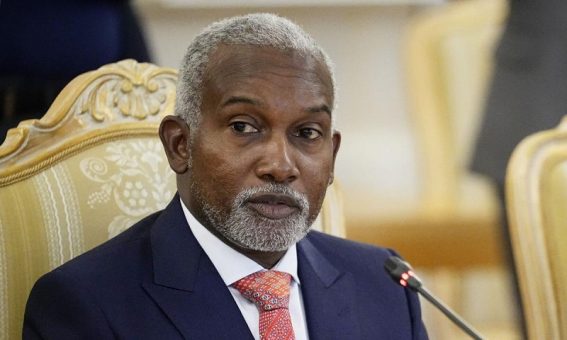
The House of Representatives Committee on Foreign Affairs has opened a probe into Minister of Foreign Affairs, Yusuf Tuggar, over the utilisation of $54 million allocated to Nigeria’s foreign missions.
The panel, chaired by Mr Oluwole Oke, directed the minister and his officials to clarify how the funds were used across 103 embassies and high commissions.
In a letter dated July 24, 2025, Oke explained that the summons was in line with Sections 88 and 89 of the 1999 Constitution (as amended), which authorize his committee to demand detailed financial records of released funds.
Earlier this year, the Oke-led committee began investigating a $2 million contract controversy linked to the renovation of Nigeria’s Permanent Representative’s residence at the United Nations in New York.
The letter to Tuggar and the missions requested documents including approved budgets for 2024 and 2025, budget performance reports, records of special interventions from 2018 to 2025, and nominal rolls for both home-based and locally employed staff.
In a related development, a letter dated July 3, 2025, signed by the Director of Funds for the Accountant General of the Federation, confirmed that the Tinubu administration released $54 million to cover operational needs of Nigeria’s 103 foreign missions.
The breakdown showed $46.14 million for overheads, $9.58 million for personnel, and $282,829 for other allocations. The Ministry of Foreign Affairs itself received $5.89 million, while several embassies got varying sums: Moscow ($1.96m), Rome ($2.82m), Vienna ($1.09m), Athens ($1.04m), Tel Aviv ($1.8m), Addis Ababa ($1.92m), Jeddah ($1.48m), Dubai ($1.26m), Madrid ($1.23m), and Tehran/Abu Dhabi ($1.18m).
Addressing journalists in Abuja, Oke praised President Bola Tinubu for the intervention, describing it as a timely move to revive Nigeria’s missions and improve its global image.
He called on the missions to submit comprehensive reports of how the allocations were utilised, stressing that accountability and transparency are crucial to good governance.
However, Tuggar has emphasized that Nigeria’s foreign policy must directly drive its economic agenda by opening trade corridors, attracting investment, and fostering partnerships that benefit the domestic economy.
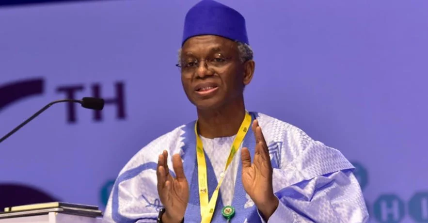
Speaking at the 31st Nigerian Economic Summit (NES #31) in Abuja, Tuggar explained that the Ministry of Foreign Affairs is now fully aligned with economic diplomacy, anchored on Nigeria’s “4D Foreign Policy Doctrine”: Democracy, Development, Demography, and Diaspora.
He noted that Nigeria’s diplomatic priorities are being shaped to enhance trade, regional growth, and industrial competitiveness, citing the newly launched West Africa Economic Summit (WAES) as a key platform for boosting cross-border industrialisation, commerce, and infrastructure within the sub-region.