

















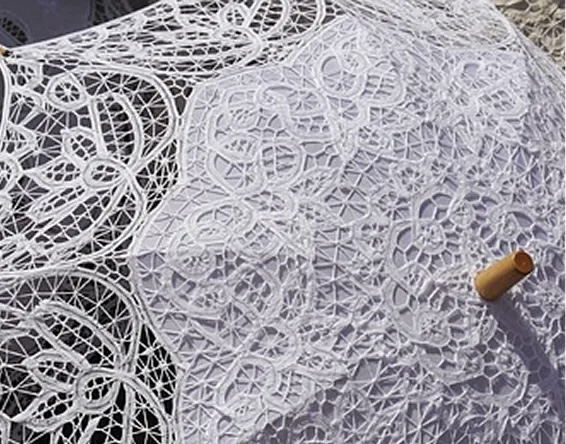
Broadcast journalist and founder of the Purple Woman Foundation, Ireti Bakare-Yusuf, has urged Nigerians to recognise locally produced lace as a Nigerian product, stressing that the country played a crucial role in the growth of the lace industry.
According to media reports, Bakare-Yusuf made the call during an interview with ARISE News, where she questioned the practice of describing lace produced in Nigeria as Austrian merely because some of the materials used in making it were imported.
“It is not Austrian lace made in Nigeria. It is Nigeria-made lace,” she said.
She said Nigeria’s contribution to the lace industry was substantial and deserved proper documentation, especially its role in the trade and production of lace.
“They wanted to do a history about the fact that the Austrians were denying Nigeria’s involvement, indeed the critical involvement, in fact, the pivotal involvement of Nigeria in the lace industry,” she stated.
Bakare-Yusuf also highlighted Lagos’ longstanding connection with the lace trade, describing Gotà as one of the major locations for lace sales.
She asserted, “If you are a Lagos person, you would know that Gotà is the home of lace. That’s where you sell this.”
She explained that while some Nigerian manufacturers sourced materials, including yarn, from abroad, the actual production and craftsmanship were carried out locally.
She further stated, “Rudy used to import some of the yarns and stuff like that. But the workmanship is Nigerian.”
Bakare-Yusuf cited Supreme Lace as an example of a product whose Nigerian manufacturing background, she said, has not received adequate recognition.
“Many people will know what Supreme Lace is. It’s just that many would have been fooled to think it was made in Austria, not in Agege,” she explained.
She urged Nigerians to take greater ownership of the country’s contribution to the lace industry and ensure it receives proper recognition.
She pleaded, “We need to make it ours.”
Bakare-Yusuf also drew attention to a documentary produced on the history of lace and Nigeria’s contribution to the industry.
“Austria paid for that documentary. That’s our story. Nigeria didn’t pay for it,” she concluded.