





















The Ekiti State Government has urged livestock farmers across the state to embrace modern techniques for enhancing livestock production, including artificial insemination and genetic breed improvement.
The state Commissioner for Agriculture and Food Security, Ebenezer Boluwade, reaffirmed the government’s determination to support livestock farmers and agribusiness operators through sustainable interventions, strategic investments and other measures aimed at improving productivity.
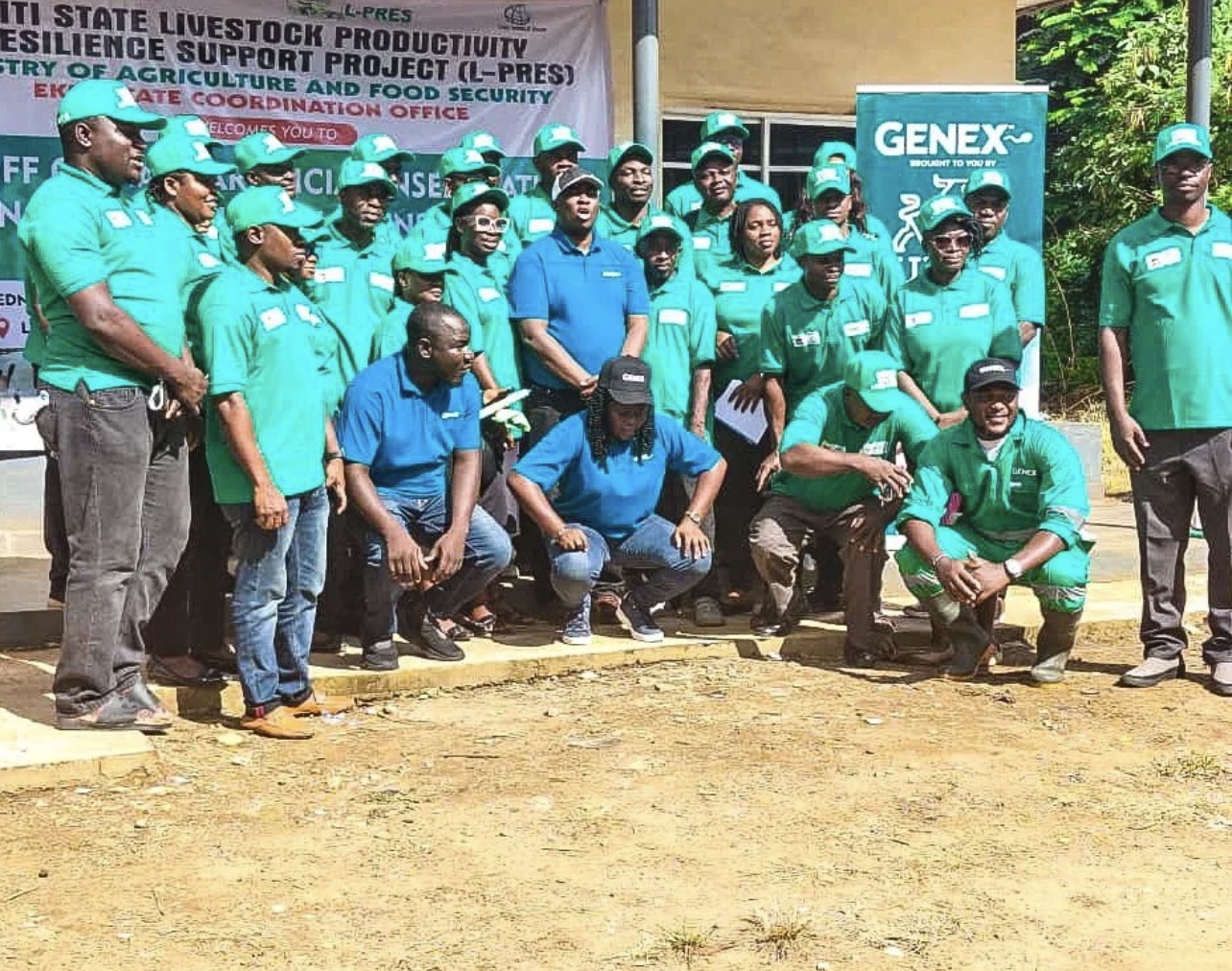
Boluwade made the remarks in Ado Ekiti on Friday during the ongoing “Mass Artificial Insemination, Training and Induction of Inseminators in Ekiti State,” organised by the state Livestock Productivity and Resilience Support Project.
He said, “The artificial insemination programme was designed by the state L-PRES for breed/genetic improvement and multiplication of livestock for better production.
“Ekiti State is targeting 850 cows and 150 goats while 30 professionals mainly from Animal Husbandry and Veterinary Departments are being trained and will be inducted as Artificial Insemination Technicians.
“It is important to raise personnel that would acquire skills in artificial insemination technology and most importantly to develop expert in artificial insemination operations that can train others and ensure sustainability and transmission of skills in the technology in the state.
“At the end of this programme, I expect to see a marked genetic improvement in our local ruminant breeds that is capable of driving economic growth and improving livelihoods”.
He said, “Survey showed that livestock productivity among L-PRES beneficiary farmers in Ekiti State is characterized by poor genetic quality and poor access to improved breeding services, resulting in low milk yield, slow growth rates, and reduced market value.
“To address this gap, Ekiti State supports the L-PRES key results indicator on artificial insemination which include increased yields in milk output, live weight gain, and carcass yield, thereby improving incomes and enhance the resilience of beneficiary households”.
Boluwade said, “the product of artificial insemination is improved hybrid vigour with better yield and performance through cross of local breeds with exotic breeds with good pedigree.
“Artificial insemination as a technology is a better channel for genetics upgrading and multiplying in livestock, eliminates the spread of sexually transmitted disease among the flock, reproductive materials and semen of good stock can also be stored for a long period of time”.
He encouraged the participants to concentrate during the training sessions, noting that the technical nature of the programme requires adequate understanding and practical knowledge.
He said, “The knowledge gained will have positive impact on improving and upgrading our local breeds of ruminant livestock in terms of faster growth rate, efficient feed conversion rate, good carcass yield and resistance to diseases.
“The Ekiti State Government remains committed to supporting livestock producers and agribusiness entrepreneurs through strategic investments in infrastructure, capacity building, market development, access to finance, and institutional strengthening,” Boluwade said.
The Lead Consultant, Genex Urus Company, Olayiwola Adekunle, said the exercise was designed “to ensure that we have citizens of Ekiti State who are able to do artificial insemination instead of importing people from other countries to do it”.
Olayiwola said Genex would provide support to the 30 trained and qualified artificial inseminators for three years as part of efforts to sustain the L-PRES intervention in the state.
He said, “We will be inseminating a lot of animals from 1000 upwards and also goats around the different local government areas in Ekiti State. We want to see sustainability and improved livelihood. At the end of the day, we want to see more animals, more milk in Ekiti State and of course the beef programme will also go on according to plan for the state”.
Also speaking, the Ekiti L-PRES Animal Husbandry Officer, Olumuyiwa Adelodun, said the mass artificial insemination exercise and training and induction of 30 technicians were aimed at improving livestock breeds and increasing their numbers.
Adelodun, who noted that the production of local breeds had declined in recent years, said, “We intend to improve their quality through artificial insemination in order to have more productive livestock in terms of meat production and meat production”.