















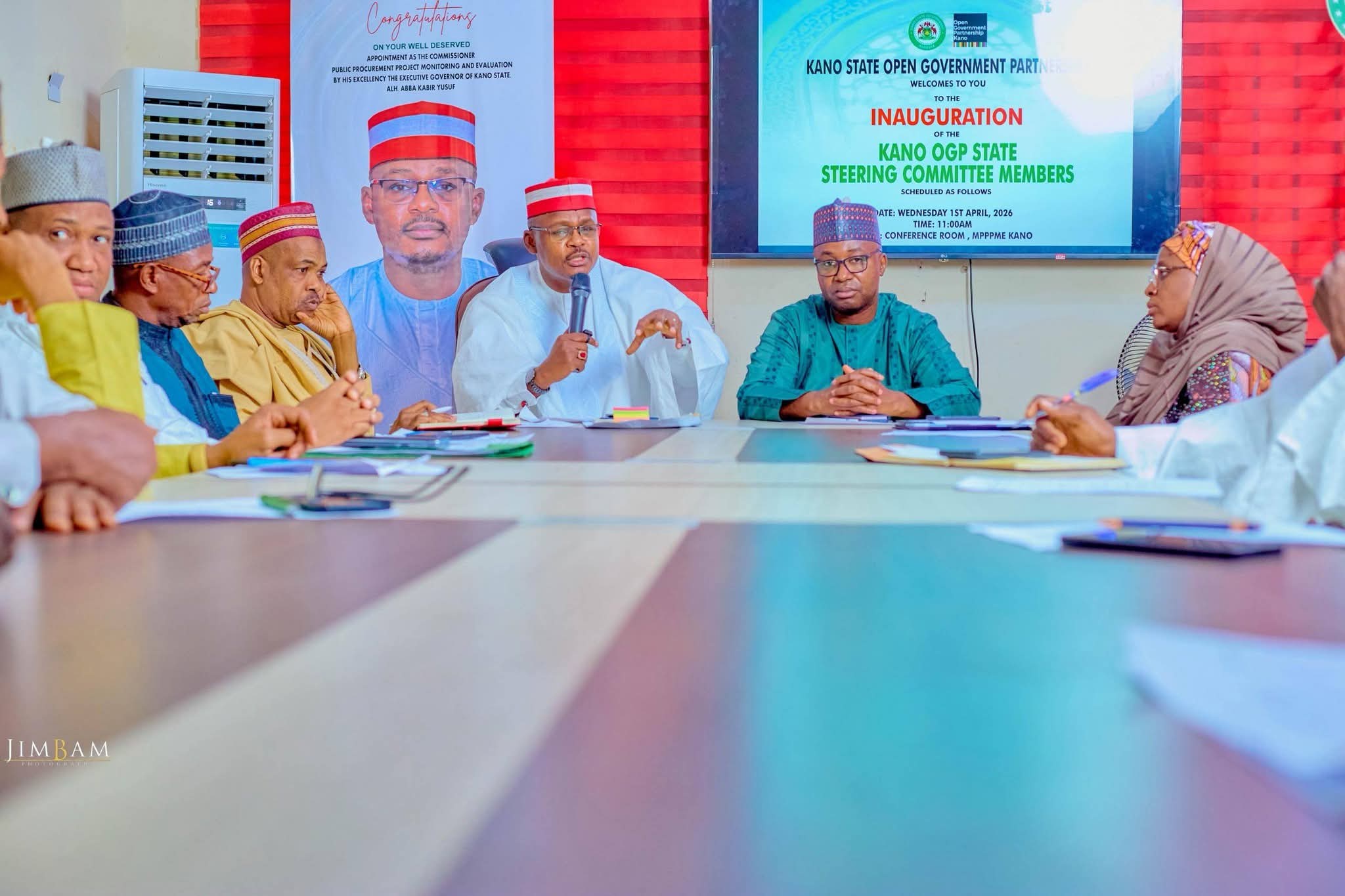
The League of Civil Society Organizations in Kano State has expressed concern over the composition and formation of the newly inaugurated Open Government Partnership (OGP) Steering Committee, warning that structural flaws could undermine transparency and accountability in the state.
In a detailed statement following the April 1, 2026 inauguration by the Kano State Government, the group said it observed the development with “a mixture of cautious optimism and profound systemic concern.”
While acknowledging the government’s intention to align with global transparency standards, the league argued that the process fell short of the OGP’s core principle of inclusive participation.
Concerns over imbalance and exclusion
The civil society group criticised what it described as “executive dominance” in the committee, noting that the inclusion of several high-ranking commissioners could stifle open dialogue.
According to the statement, “by loading the committee with five high-ranking Honourable Commissioners… the state government has created a lopsided hierarchy,” warning that such a structure may limit critical engagement.
The league also faulted the exclusion of key stakeholders such as the private sector, academia, and professional bodies, saying this denies the committee the expertise needed to address complex governance issues.
“OGP is not a ‘CSO-Government’ club; it is an ‘Open Government’ platform,” the statement added.
Questions over selection process
The group further raised concerns about the process used to select civil society representatives, stating there was no clear evidence of a transparent or independent selection.
“When the government handpicks its ‘partners,’ it is no longer a partnership; it is an extension of the executive arm,” the league said.
It also described the government’s plan to later adopt co-creation principles as flawed, stressing that “co-creation is not an afterthought; it is a precondition.”
The statement questioned the timing of the committee’s inauguration, noting that the current State Action Plan (2024–2026) is already nearing completion.
It asked, “for the past two years, where was the oversight? Who was monitoring the milestones?” warning that late implementation could reduce reforms to mere “paper achievements.”
Risks to governance and public trust
The CSOs warned that the current structure could weaken public trust, create institutional instability, and exclude key groups such as women and persons with disabilities.
“A ‘transparency committee’ dominated by executive actors creates an inherent conflict of interest,” the group stated, adding that such a setup risks discouraging citizen participation.
It also cautioned that poor implementation of OGP principles could affect Kano’s international reputation and reduce access to funding and investment opportunities.
Demands for immediate reforms
To address the issues, the league called for urgent steps, including:
- A transparent re-validation of civil society representatives
- Inclusion of private sector, academia, and professional bodies
- Improved gender and social inclusion in the committee
- Public release of a detailed progress report on the State Action Plan
- Creation of a digital platform for citizen engagement and accountability
Call for genuine transparency
The group urged both national and global OGP bodies to take note of the concerns, insisting it remains open to collaboration but not at the expense of accountability.
“Kano deserves a government that is not just open in name, but open in deed,” the statement concluded.