


















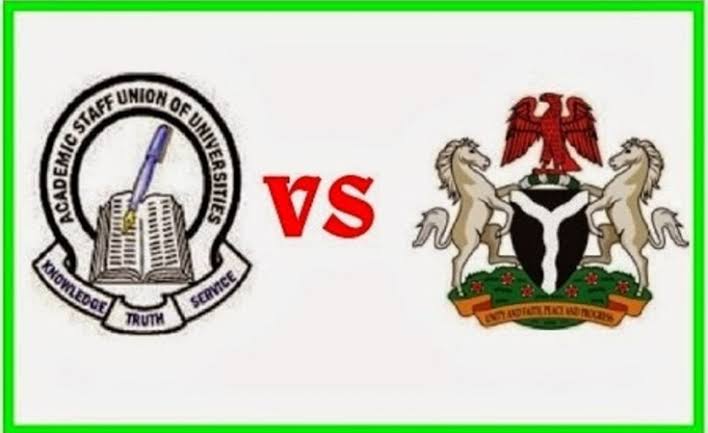
The Federal Government has dismissed reports that it signed a binding agreement with the Academic Staff Union of Universities (ASUU), saying what exists is only a draft document.
The Minister of Education, Dr. Tunji Alausa, clarified the government’s stance while speaking with journalists about the ongoing nationwide protest by the Academic Staff Union of Universities (ASUU).
According to a report by The Ripples Nigeria, the minister said ”contrary to the impression of some Nigerians, the government had never signed any binding agreement with ASUU and described the document as a draft.”
He reiterated the government’s commitment to resolving issues raised by the union, saying President Bola Tinubu had mandated the ministry to find a lasting solution that would keep Nigerian children in school.
The minister stressed that the administration was not interested in “bogus or unsustainable agreements” but in reaching an accord that was implementable and constitutionally backed.
He pointed out that ASUU’s recent protests would not degenerate into strike action, as the government had engaged the union “continuously and meticulously.”
The union had, during the week, threatened to embark on a fresh strike over the federal government’s failure to address its demands.
Alausa said: “We are committed to solving this problem once and for all. What has lingered since the 2009 and 2021 agreements will now be addressed sustainably.
“The President has made it clear that every promise made to ASUU and Nigerians will be fulfilled truthfully and honestly.”
He revealed that the government met with stakeholders on Thursday to find a lasting solution to the lingering problems.
He noted that the meeting had in attendance the Minister of State for Education, the Minister of Labour and Productivity, and the Solicitor-General of the Federation.
Also present were Permanent Secretaries from the Ministries of Education, Labour, and Justice, alongside the heads of major government agencies such as the National Universities Commission (NUC), the Salaries and Wages Commission, and the Budget Office.