












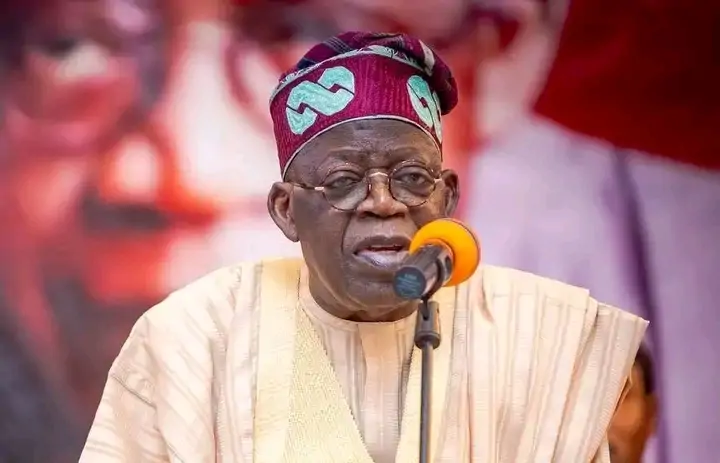
President Bola Tinubu on Tuesday sought the Senate’s approval to borrow ₦1.15 trillion from the domestic debt market to fund part of the deficit in the 2025 national budget.
The request, presented in a letter read during plenary by Senate President Godswill Akpabio, marks the latest in a string of borrowing proposals by the executive arm aimed at sustaining government programmes amid fiscal pressures.
According to the President, the new borrowing is intended to “bridge the funding gap and ensure the full implementation of government programmes and projects” under the 2025 fiscal plan.
Akpabio subsequently referred the request to the Senate Committee on Local and Foreign Debt for legislative review, directing the committee to report back within one week for further action.
Previous Borrowing and Rising Debt Concerns
The development comes barely five days after the Senate approved another of Tinubu’s requests — a $2.847 billion external loan, including a $500 million debut Sovereign Sukuk, to finance the 2025 budget deficit and refinance Nigeria’s maturing Eurobonds.
The earlier approval followed the presentation of a report by the Senate Committee on Local and Foreign Debts, chaired by Senator Wamakko Magatarkada Aliyu (APC, Sokoto North). According to the committee, $2.347 billion would be sourced from the international capital market, while the remaining $500 million would come from Sukuk bonds to fund key infrastructure projects across the country.
The Senate’s endorsement of the new borrowing plan has reignited public concern over Nigeria’s soaring debt profile, which, according to the Debt Management Office, surpassed ₦97 trillion by mid-2025.
While critics warn that the trend could push the economy toward unsustainable debt levels, government officials and lawmakers maintain that strategic borrowing remains crucial to sustaining growth, financing infrastructure, and maintaining investor confidence.
Recall that Tinubu had earlier, on October 8, 2025, written to the Senate seeking approval for new foreign loans under the 2025 fiscal framework to fund key national projects and manage debt obligations.
Presenting the committee’s report at the time, Senator Wamakko justified the borrowing, emphasising its necessity for economic stability, project continuity, and Nigeria’s international credit standing.
“The borrowing plan is essential for Nigeria’s economic stability and to ensure that the country meets its 2025 funding needs without derailing ongoing fiscal commitments,” he said.
Chairman of the Senate Committee on Finance, Senator Sani Musa (APC, Niger East), also endorsed the request, describing it as vital for the implementation of the 2025 Appropriation Bill.
“It is very necessary that we give approval to this request so that the 2025 appropriation will be given the necessary funding,” Musa stated.
In his contribution, the Chairman of the Senate Committee on Banking, Insurance and Other Financial Institutions, Senator Adetokunbo Abiru (APC, Lagos East), clarified that the borrowing would not worsen Nigeria’s debt burden but was part of an already approved fiscal framework.
“This is more of a compliance issue because the 2025 Appropriation Act has already captured it as part of the deficit financing. The second request is a refinancing arrangement to ensure that the country does not default in Eurobond servicing,” Abiru explained.
Also speaking, Chairman of the Senate Committee on Interior, Senator Adams Oshiomhole (APC, Edo North), defended the administration’s borrowing approach, insisting that well-structured loans targeted at productive sectors could boost economic activity.
“There’s nothing wrong with borrowing if it is properly structured and used to address critical issues like unemployment and infrastructural decay,” Oshiomhole said.
With the new borrowing request, the Tinubu administration continues its effort to consolidate Nigeria’s fiscal position ahead of the 2025 financial year, even as it grapples with dwindling oil revenues, high inflation, and rising debt-servicing costs.