















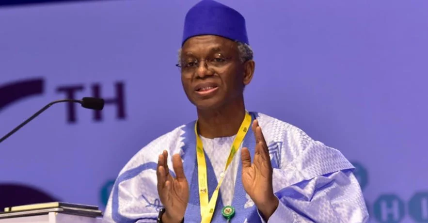
Former Kaduna State Governor Nasir El-Rufai has spoken about the silence of some of his former associates, friends and family members during his current circumstances, saying he holds no hatred or resentment against those who have chosen not to support him.
The former Minister of the Federal Capital Territory disclosed this in a statement titled “My Relationships and the Aftermath”, which he shared on his X handle on Wednesday.
El-Rufai said his decision to support people and causes over the years was driven by his Islamic faith, Arewa background, personal convictions and conscience, rather than a desire for appreciation or reciprocal support.
“Over the years, I have stood by people and for causes I believed in, sometimes in difficult circumstances and at considerable personal cost. I did so not in expectation of praise, gratitude or reciprocity, but because I believed it was right,” he said.
The former governor said people he had previously supported were entitled to determine how they would respond to his present situation, noting that their reactions could include speaking out, remaining silent or distancing themselves from their past associations.
“Those I have supported are free to make their own choices now that circumstances are reversed. Some may speak; others may remain silent. Others may even deny our relationship or try rewriting history,” he said.
He added, “Their reasons are their own, and I do not wish to judge them merely because their response differs from what others—or even I—might have expected.”
El-Rufai said the challenges he had faced in recent months had prompted him to reassess some of his relationships and consider how people around him had responded.
“Adversity has a way of illuminating relationships,” El-Rufai said, adding that the experience might lead him to “reconsider the nature of certain relationships and what those that look up to me expect of them.”
The former governor said the experience had also provided an opportunity to gain a clearer understanding of some of the relationships in his life.
“Adversity has a way of illuminating relationships,” El-Rufai said, adding that the experience might lead him to “reconsider the nature of certain relationships and what those that look up to me expect of them.”
He clarified that his reflections should not be viewed as an attack or condemnation of those whose conduct had differed from his expectations.
“That is neither reproach nor condemnation; it is simply part of seeing people, and life, more clearly,” he said.
El-Rufai said he remained satisfied with the decisions he had made to support people and causes whenever he considered such support to be the right thing to do, regardless of how others had subsequently treated him.
“I have no regrets about standing by people or for causes when I believed it was right to do so, and I bear no resentment towards anyone who chooses not to do the same for me,” he said.
Addressing any wrongs, lack of appreciation or harm he may have experienced, the former governor said he would not pursue retaliation against those responsible.
“As for any injustice, ingratitude or injury done to me, I seek neither revenge nor retribution. Ultimate accountability belongs to Almighty Allah, and I leave that judgment to Him, in this world and in the Hereafter,” he said.
El-Rufai said his principal concern remained maintaining peace with his conscience and with Almighty Allah, regardless of how others had chosen to respond to his circumstances.
“In the end, each of us must live with the choices we make, and posterity will render whatever verdict it sees fit. My only concern is to remain at peace with my conscience and, above all, with Almighty Allah,” he said.