



















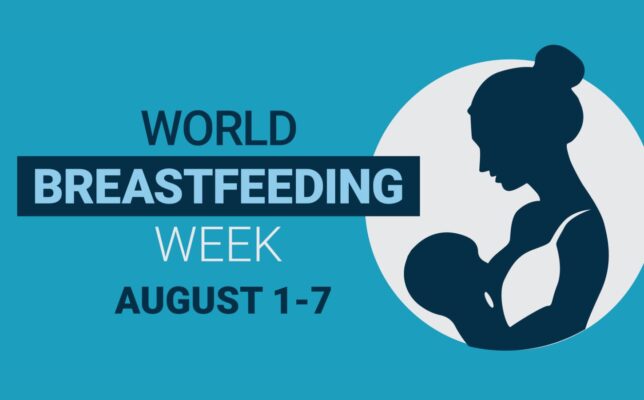
Every year from August 1 to 7, the global community observes World Breastfeeding Week—an initiative launched by the World Alliance for Breastfeeding Action (WABA) in collaboration with the World Health Organization (WHO) and UNICEF.
The week serves as a worldwide campaign to promote and support breastfeeding as a universal solution to health, nutrition, and overall well-being.
Breastfeeding is far more than a biological process; it is a life-saving intervention.
According to WHO, it remains one of the most cost-effective strategies to improve child survival and health outcomes globally.
Studies show that exclusive breastfeeding for the first six months of life, followed by continued breastfeeding alongside appropriate complementary foods, can prevent countless childhood illnesses and reduce mortality rates.
In an interview with Dr. Oni Waliyullah, an obstetrician and gynecologist at the Lagos State Teaching Hospital, Lagos State, he explained that the main objective behind WHO’s dedication of this week is to encourage breastfeeding and discourage the preference for artificial milk.
“The use of formula or artificial milk, IS linked to higher rates of illness and death in children. Breast feeding is nature’s perfect design for nourishment and protection,” He said.
Dr. Waliyullah highlighted that breastfeeding benefits not only babies but also mothers. Drawing from religious teachings, he noted,
“The Holy Qur’an recommends breastfeeding for a period of two years, and other religious scriptures also emphasize its value.”
He explained that breast milk is uniquely tailored to meet a baby’s nutritional needs. From its perfect balance of proteins, fats, and vitamins to antibodies that protect against disease, it is the ideal first food for life.
Special mention was given to colostrum—the thick, yellowish first milk produced by the mother.
“Colostrum is rich in antibodies and nutrients that give newborns their first line of defense against infections,” Dr. Waliyullah said. “No artificial substitute can match its benefits.”
Beyond health, the benefits of breastfeeding extend to society, the economy, and the environment. Dr. Waliyullah pointed out that breastfeeding reduces healthcare costs by lowering the incidence of childhood and maternal illnesses, minimizes environmental waste from formula production and packaging, and strengthens the bond between mother and child.
He urged families, communities, and workplaces to actively support breastfeeding mothers.
“This is not just a personal choice—it’s a societal responsibility. When we support mothers, we protect the future,” he said.
As the world observes World Breastfeeding Week this August, the message is clear: breastfeeding is both a public health priority and a sacred duty. It is supported by science, honored by faith, and vital for building healthy generations.
From the home to hospitals, workplaces, and places of worship, every sector of society has a role to play in creating an environment where mothers feel empowered to give their children the best start in life.