














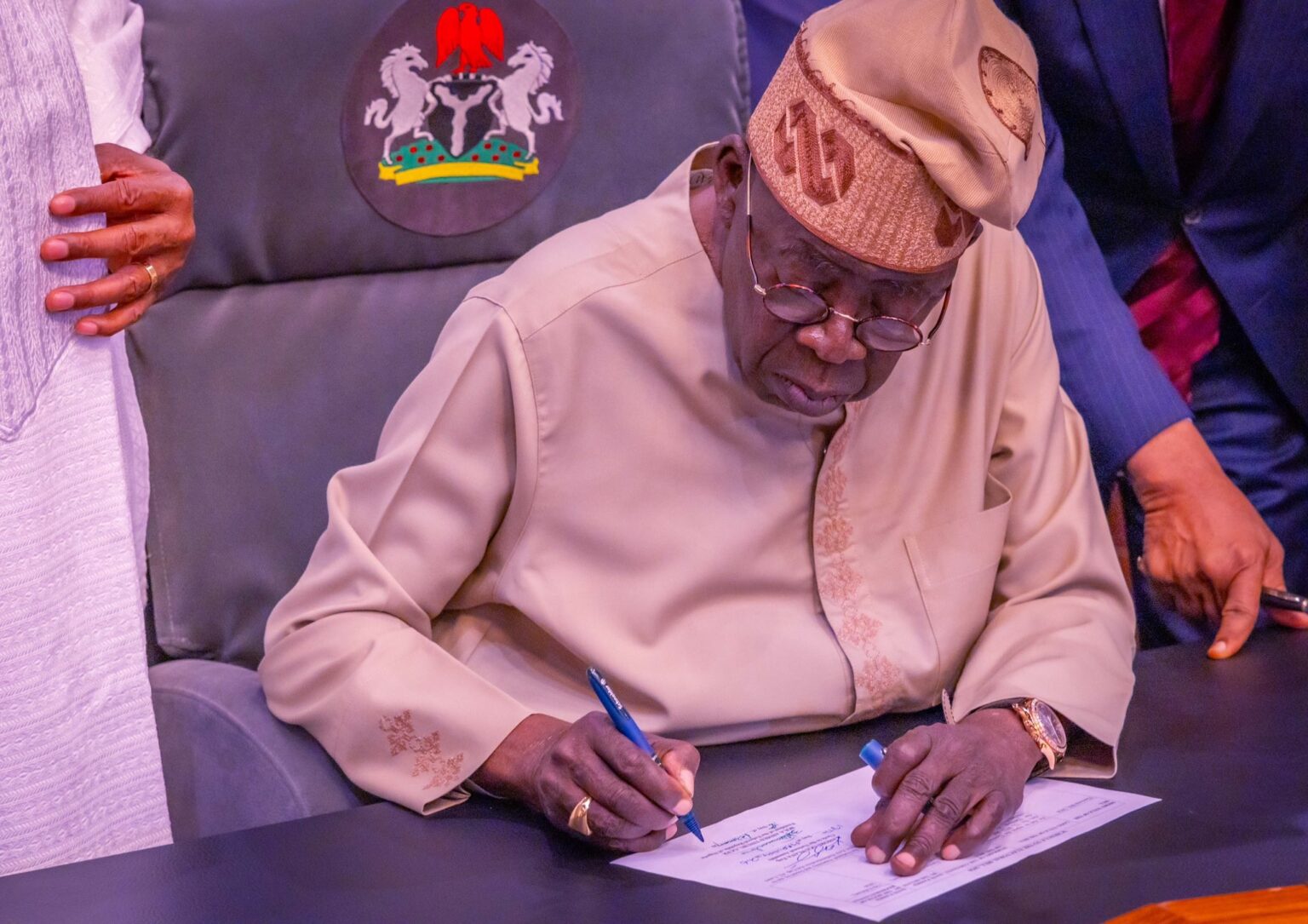
President Bola Tinubu has approved the 2026 Appropriation Bill into law, authorising a total expenditure of ₦68.32 trillion for the fiscal year.
He also endorsed a separate legislation extending the implementation timeline of the 2025 budget from March 31 to June 30, 2026.
The budget designates ₦4.799 trillion for statutory transfers and ₦15.8 trillion for debt servicing.
It also provides ₦15.4 trillion for recurrent spending and ₦32.2 trillion for capital projects through the Development Fund.
The presidency disclosed this in a statement issued by Special Adviser on Information and Strategy, Bayo Onanuga on Friday.
The statement read, “President Bola Ahmed Tinubu has assented to the 2026 Appropriation Bill, which provides for an aggregate expenditure of ₦68.32 trillion. He has also signed the bill extending the implementation period for the 2025 budget from March 31, 2026, to June 30, 2026.
“The N68.32 trillion budget for this year earmarks N4.799 trillion for statutory transfers and N15.8 trillion for debt service. It allocates N15.4 trillion to recurrent expenditure and N32.2 trillion to the Development Fund for Capital Expenditure.
“With capital expenditure accounting for about 50 per cent, the 2026 budget underscores the administration’s continued commitment to economic stability, national security, infrastructure development, and inclusive growth.
“The allocations reflect a strategic balance between statutory obligations, debt servicing, recurrent expenditure, and capital investments critical to driving productivity and improving the quality of life for Nigerians,” it added.
The 2026 Appropriation Act became effective on April 1, with the Federal Government commencing full rollout in line with what the presidency describes as the Renewed Hope Agenda.
Tinubu also signed the Appropriation (Repeal and Enactment) (Amendment) Bill, 2026, extending the capital aspect of the 2025 Appropriation Act by three months to June 30.
According to the presidency, the extension is aimed at ensuring full utilisation of allocated funds, especially for major infrastructure projects nearing completion.
“The extension will ensure the full and effective utilisation of appropriated funds, particularly for critical infrastructure and development projects that are at advanced stages of implementation across the country.
“It will enable Ministries, Departments, and Agencies (MDAs) to consolidate ongoing works, enhance project completion rates, and maximise value for public expenditure,” the statement read.
Tinubu instructed MDAs to maintain discipline, transparency, and efficiency in managing allocated funds, stressing value for money and prompt project execution.
He praised the leadership and members of the National Assembly for what the presidency described as their “diligence, cooperation, and patriotism in expeditiously considering and passing the budget.”
“The President reaffirmed the importance of sustained collaboration between the Executive and Legislative arms of government in advancing national development objectives,” the statement noted.
Tinubu also reassured Nigerians of his administration’s determination to deepen fiscal reforms and improve revenue generation.
“He further assured Nigerians of his administration’s resolve to deepen fiscal reforms, enhance revenue generation, and prioritise investments that will stimulate economic growth, create jobs, and strengthen social protection mechanisms,” the statement read.
The budget, titled “The Budget of Consolidation, Renewed Resilience and Shared Prosperity,” was initially presented to a joint session of the National Assembly on December 19, 2025, with a proposed figure of ₦58.47 trillion.
It passed second reading in the House of Representatives on January 29, 2026, before undergoing further legislative review and increasing to ₦68.32 trillion at the point of approval.
During the second reading debate in January, House Leader Julius Ihonvbere urged lawmakers to support the proposal, citing a projected 3.98 per cent economic growth rate for 2026, an anticipated decline in inflation to 14.45 per cent, improved revenue performance, and growth in foreign direct investment.
He also referenced a stabilisation of the naira at around ₦1,400 to the dollar and an increase in Nigeria’s external reserves to a seven-year high of about $47 billion.
When Tinubu presented the bill to lawmakers in December, he described it as a defining milestone in Nigeria’s reform efforts, acknowledging the strain the process had placed on households and businesses while maintaining that the sacrifices were necessary.
“The path of reform is seldom smooth, but it is the surest route to lasting stability and shared prosperity,” he told the joint session.
He pledged that 2026 would signal a decisive shift towards stronger budget implementation discipline, declaring an end to the long-standing practice of overlapping budgets and continuous rollovers.
The budget outlines four key objectives: consolidating macroeconomic stability, enhancing the business and investment climate, promoting job-driven growth, and strengthening human capital development while protecting vulnerable populations.
Major sectoral allocations include ₦5.41 trillion for defence and security, ₦3.56 trillion for infrastructure, ₦3.52 trillion for education, and ₦2.48 trillion for health.
Minister of Information Mohammed Idris, in a January op-ed, described the budget as a commitment to sustain the administration’s reform progress and ensure shared prosperity becomes “a lived reality for more Nigerians, faster.”
He pointed to increased business activity, rising investor confidence, easing inflation, and stronger external reserves as early signs of progress, and highlighted ongoing infrastructure projects including the Coastal Highway, Sokoto–Badagry Expressway, and Ajaokuta–Kaduna–Kano Gas Pipeline as evidence of the administration’s performance.