




















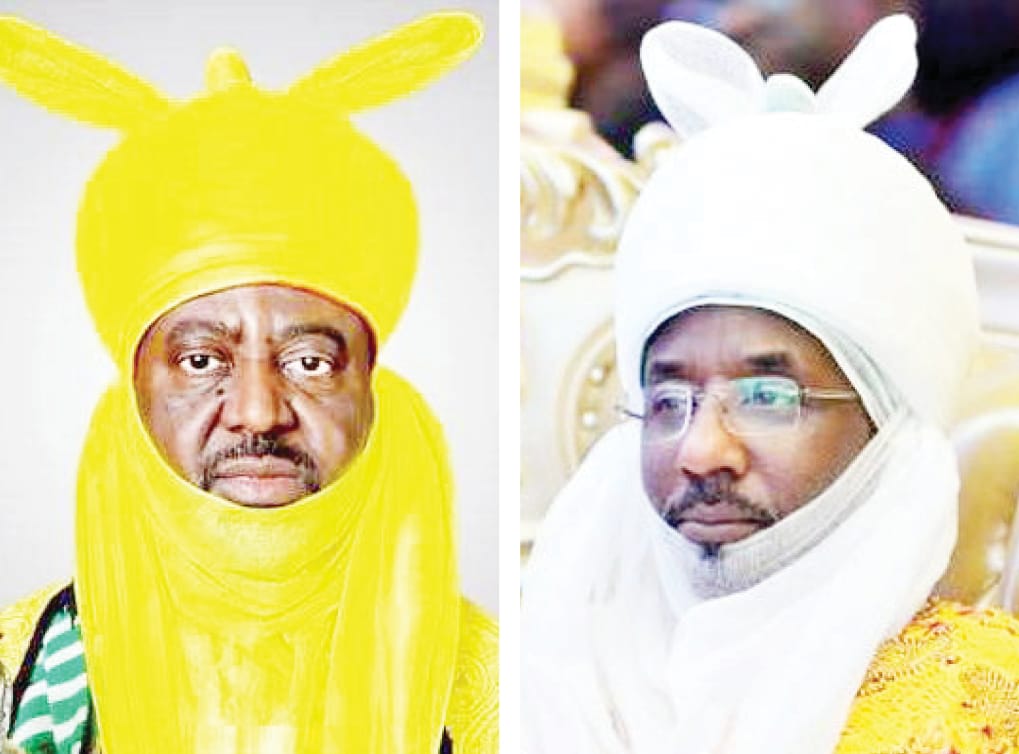
The two emirs laying claim to the Kano emirate throne, Muhammadu Sanusi II and Aminu Ado Bayero, have announced the suspension of all Eid-el-Kabir Sallah durbar activities in the state.
The decisions, disclosed in separate briefings, were said to have followed security concerns and directives from security agencies after both monarchs unveiled plans to organise parallel durbars.
Earlier, both Sanusi and Bayero had declared intentions to stage separate Sallah durbar celebrations during the Eid festivities.
However, speaking on behalf of Emir Sanusi, Matawallen Kano, Alhaji Aliyu Ibrahim, said the emirate council received security reports indicating that some individuals were planning to use the durbar celebrations to disrupt public peace and create chaos in Kano.
According to him, the decision to suspend the events was reached to prevent any breakdown of law and order and to sustain the peaceful atmosphere in the state during the Eid celebrations.
Similarly, Sarkin Dawaki Babba, Alhaji Aminu Babba Dan’agundi, announced the suspension on behalf of Emir Aminu Bayero.
He said the decision was taken in compliance with police directives issued to ensure peace and stability in Kano.
He stated that they are law-abiding citizens and would fully comply with the order of the security agencies in the interest of maintaining peace in the state.
On Wednesday, the two emirs staged parallel Hawan Sallah in different locations and along separate routes.
However, residents began expressing concerns when they also announced plans to hold additional durbars, which are traditionally conducted on designated routes and locations, raising fears of possible clashes between supporters.
Reports indicated that the tussle over the emirship began in 2024 after Governor Abba Kabir Yusuf dethroned Bayero and reinstated Sanusi, four years after his removal by former Governor, Abdullahi Umar Ganduje in 2020.
Since then, the matter has remained before various courts, resulting in the suspension of one of the most iconic Hausa traditions in the emirate almost every year.
Recently, the Supreme Court adjourned ruling on the matter until April 2027, thereby placing any action regarding the crisis on hold pending its final decision.