




















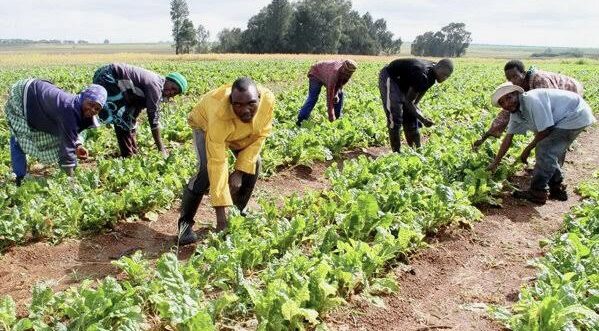
The Sasakawa Africa Association (SAA), in partnership with AGRA, has launched a mobilisation and sensitisation drive targeting smallholder farmers in Kaduna and Niger states to scale up maize and soybean production.
The exercise, led by SAA Consultant Prof. Isaac Eni, began on Wednesday in Gonin Gora, Chikun LGA of Kaduna State.
Prof. Eni said the outreach was designed to secure community participation and prepare farmers for a three-year project scheduled to run from September 2025 to March 2028.
“This initiative targets 100,000 farmers and aims to raise the productivity and competitiveness of maize and soybean producers by at least 30 per cent,” he said.
He explained that the sensitisation exercise was critical to ensuring farmers fully understood the project’s objectives, processes and market-driven opportunities along the value chain.
Focus on Women, Youth, Vulnerable Groups
According to him, the project will prioritise vulnerable groups, with women making up 50% of beneficiaries, youth 40%, and the remaining 10% allocated to persons with disabilities and men.
Of the targeted 100,000 farmers, 60,000 will engage in maize production, while 40,000 will focus on soybean, across 20 selected LGAs of the two states.
Prof. Eni noted that SAA is partnering with key private-sector actors to expose farmers to improved seeds, essential inputs and reliable markets.
Emmanuel Sunday, Senior Research Officer at Premier Seeds, told farmers that the company remained committed to providing timely and affordable improved maize and soybean seeds.
State Government Commends Initiative
The Agricultural Desk Officer at the Kaduna State Ministry for Local Government, Maimuna Sufyanu, praised SAA for taking the mobilisation campaign to grassroots communities.
She said the initiative would not only empower rural farmers but also strengthen food security in the participating states.
According to her, “With mobilisation underway across communities, the SAA/AGRA project will deepen farmer awareness, build confidence, and pave the way for enhanced productivity and a stronger value chain in the maize and soybean sectors.”