












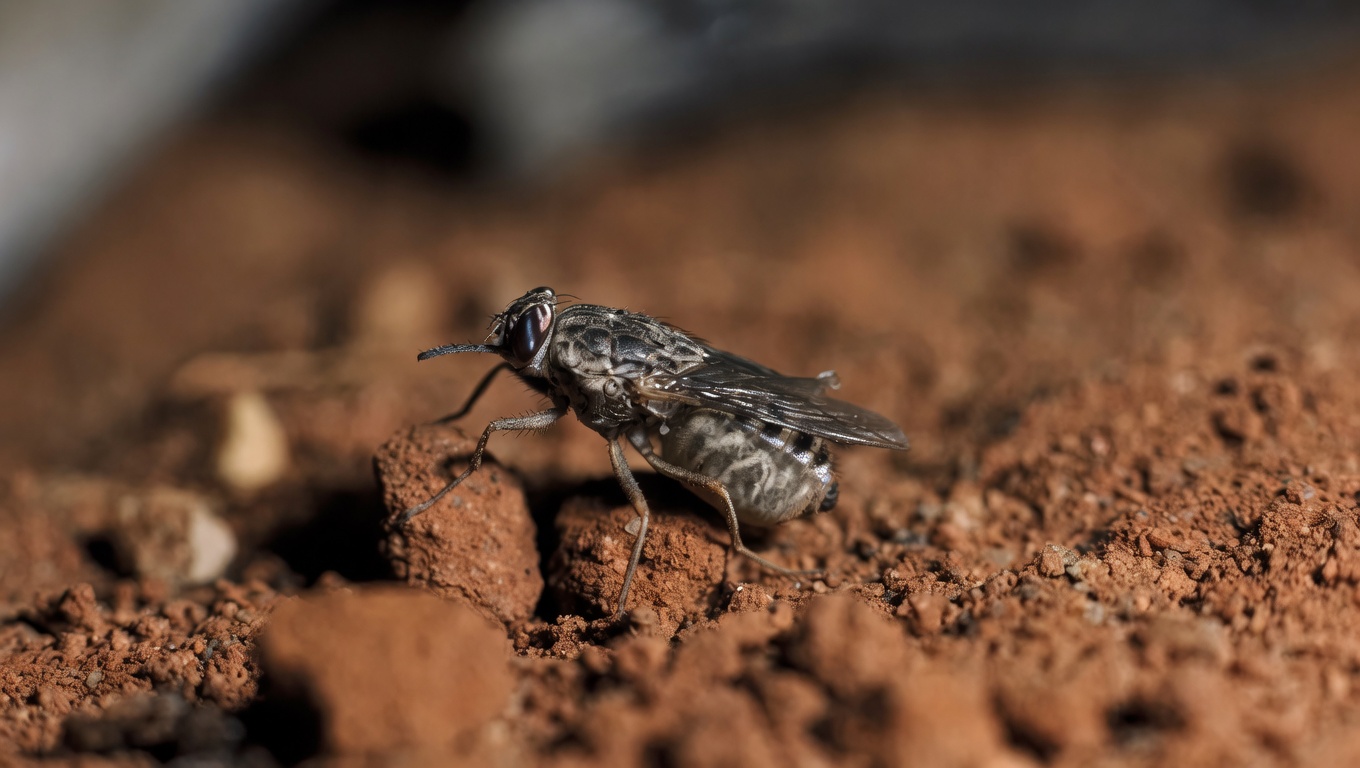
The Federal Government has stepped up measures to combat tsetse flies and the diseases they spread through a coordinated operation across the Federal Capital Territory, Kogi, and Ogun states.
The programme, spearheaded by the Federal Ministry of Livestock Development, focuses on grazing reserves, livestock hubs, and identified high-risk routes as part of a wider plan to protect livestock productivity and public health.
In a statement issued on Monday by the ministry’s Deputy Director, Information and Public Relations, Henrietta Okokon, the initiative integrates surveillance, vector control, and community awareness, with teams deploying traps, fumigation, and insecticide applications to curb infestation levels.
Speaking through the statement, Deputy Director and Coordinator, Federal Epidemiology Unit, Ozoemena Uche, highlighted the public health risks posed by the vector.
He said, “Tsetse flies transmit trypanosomiasis, which affects both animals and humans. Our goal is to reduce its impact on livestock productivity and prevent associated public health risks.”
Also at the Paikon Kore Grazing Reserve, the manager, Mohammed Bala, raised concerns over other livestock diseases affecting herders.
He said, “We are also dealing with diseases like foot-and-mouth and contagious bovine pleuropneumonia. We need sustained veterinary support and access to vaccines to protect our livestock.”
In Kogi State, where activities spanned six local government areas, officials emphasised the urgency of the intervention in safeguarding livelihoods.
Team Lead of the Tsetse Fly Surveillance and Ground Control Programme, Abdulkadiri Adaji, also added that, “The prevalence of tsetse flies continues to impact livestock production and livelihoods. This exercise is critical to generating data and implementing control measures that will reverse this trend,” adding that “diseases transmitted by animals can affect humans and so addressing this challenge is essential not just for agriculture, but for national health security.”
In Ogun State, the Federal Government stated that it employed a mix of control strategies to address the infestation.
Team Lead, Federal Ministry of Livestock Development, Gilbert Okoro, said, “We are deploying both physical and chemical control methods. Traps are used to capture the flies, while insecticides are applied to eliminate those not caught.
“This aligns with the One Health approach, ensuring that human health, animal health, and environmental safety are addressed together”, he added.
The ministry noted that the exercise is part of an ongoing national effort to tackle tsetse-borne diseases, enhance livestock production, and secure rural livelihoods across the country.