

























By: Mohammed Bello
As the political class across the states of the federation turns its gaze toward the fast-approaching general elections on January 16, 2027, a familiar anxiety hangs over the country’s democratic experiment. Nigeria is navigating a complex crucible of economic realignment, institutional recalibration under the Electoral Act, and a restive, digitally mobilized citizenry.
While domestic commentators often analyze these dynamics in isolation, political evolution rarely happens in a vacuum. Across the Atlantic, recent major democratic cycles, most notably the U.S. midterm elections that saw dramatic shifts against ruling configurations, offer a compelling comparative mirror. Though the US and Nigeria operate on entirely different constitutional architectures, human psychology at the ballot box remains remarkably uniform. When citizens walk into a voting booth, they do not vote for ideological abstractions; they vote based on the immediate texture of their daily lives.
As political parties and the electorate prepare for the January 2027 polls, the international experience provides four profound, hard-hitting lessons for Nigeria’s political future.
1. The Pocketbook Imperative: Economic Realities Trump Long-Term Theory
In the American midterms, the ruling party faced severe headwinds because voters experienced acute cost-of-living pressures, punishing inflation, and economic anxiety. The lesson was direct: an electorate struggling to make ends meet rarely rewards a government for theoretical, textbook macroeconomic gains that have not trickled down to the grassroots.
Nigeria sits at a critical economic crossroads. Bold structural reforms, most notably the removal of the petroleum subsidy and the harmonization of foreign exchange windows, have radically re-engineered the nation’s fiscal architecture. While federal and state FAAC allocations have risen substantially, the immediate aftermath brought severe cost-of-living adjustments, pushing consumer cost pressures and hitting urban and rural households alike.
For Nigeria’s ruling party, the primary lesson for January 2027 is that survival depends on tangible, aggressive safety nets that cushion the vulnerable from structural pain. Citizens cannot be fed on fiscal statistics or future projections. Conversely, for the opposition, the takeaway is equally sobering: complaining about inherited or systemic economic hardship is no longer enough. The electorate demands granular, credible, and alternative blueprints for economic management, not hollow rhetoric.
2. The Fallacy of Structural Complacency and Safe Strongholds
Historically, political parties in Nigeria have relied on entrenched ethnic calculations, regional strongholds, and rigid party machinery to guarantee victory. Yet, global democratic trends show that traditional loyalties are fracturing. Voters across modern democracies are becoming increasingly transactional, performance-driven, and volatile.
When a ruling administration or an entrenched political elite assumes that a specific demographic or regional bloc will vote out of sheer habit, they invite mass apathy or protest votes. The contemporary Nigerian voter, particularly the urban dweller facing high transport and energy, and general living costs, is evaluating governance through the lens of concrete utility. Parties that fail to reinvent their engagement strategies beyond ethnic arithmetic risk alienating a populace that is exhausted by status-quo politics.
3. The Demographic Dynamo: Harnessing the Youthful Majority
A defining hallmark of international electoral shifts is the sudden, decisive mobilization of younger demographics who demand institutional accountability, transparency, and a radical departure from old-guard politics.
Nigeria possesses one of the youngest populations on earth. This demographic is digitally native, globally connected, and acutely conscious of systemic bottlenecks, from high youth unemployment to infrastructural deficits. The January 2027 polls will be heavily influenced by how effectively political actors speak the language of this generation. If the political establishment treats young people merely as campaign foot soldiers or social media mobs rather than substantive stakeholders in governance, the ballot box will bear witness to a silent, potent rebellion. Engagement must move beyond tokenism into concrete policy frameworks for digital innovation, job creation, and security.
4. Institutional Integrity and the Sacredness of the Ballot
Elections are ultimately a referendum on trust. In international contexts, democratic backlashes often stem from a perceived disconnect between executive overreach and the public’s demand for institutional checks and balances.
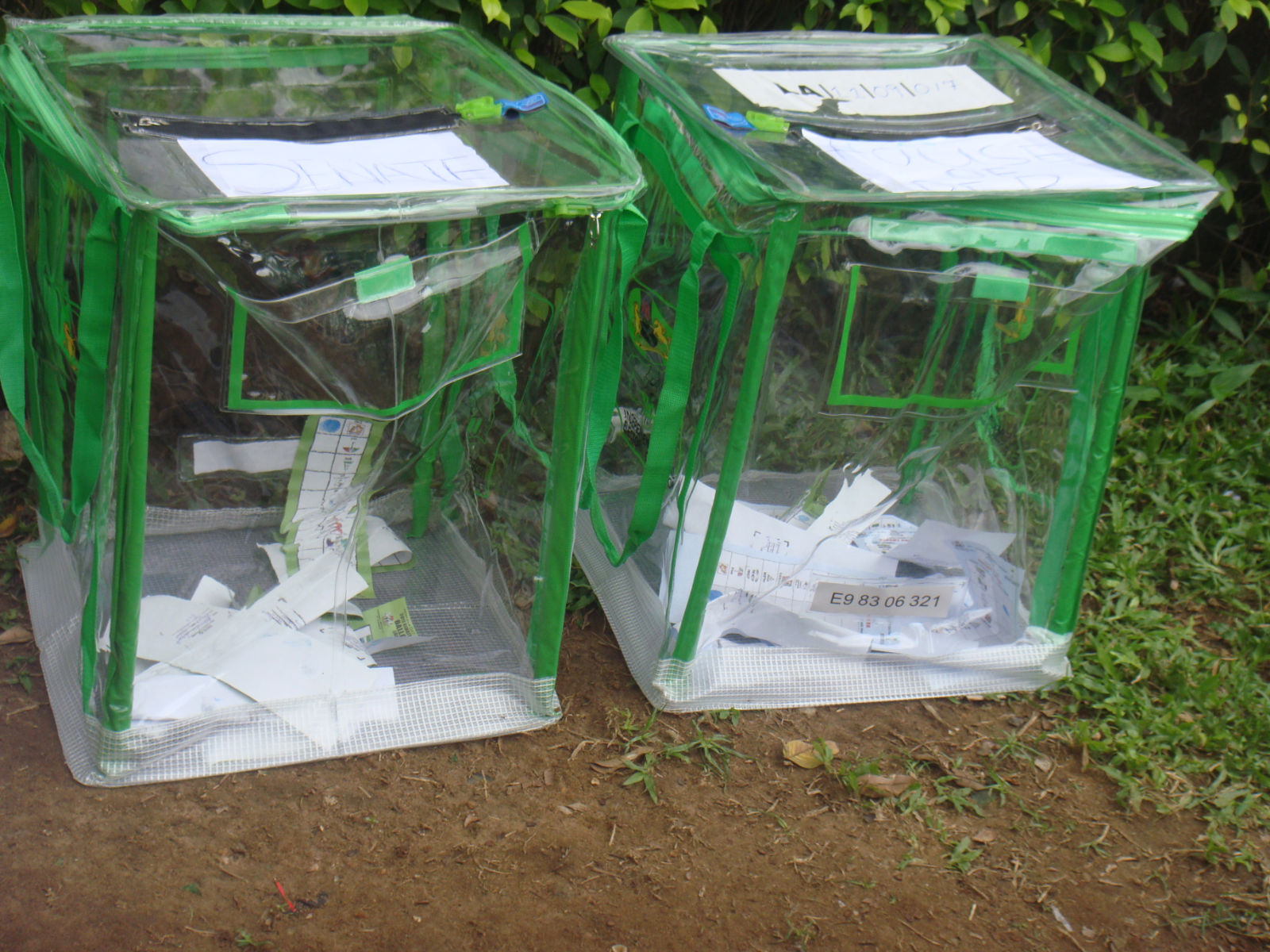
In Nigeria, this translates directly to the integrity of the electoral umpire, the Independent National Electoral Commission (INEC), and the security architecture. With the statutory framework guided by the Electoral Act, the technical and administrative execution of the January 2027 polls will be scrutinized under a microscope. The deployment of technology, such as biometric verification and electronic results transmission, must transcend administrative bottlenecks and technological failures. When citizens lose faith in the ballot’s sanctity, democratic legitimacy collapses, breeding cynicism and volatility. Ensuring absolute transparency is not just an operational requirement; it is a national security imperative.
The Verdict for 2027
Nigeria’s upcoming polls are more than a routine change of guard; they are a stern test of democratic maturity. As the campaigns intensify and the electoral clock ticks down to January 2027, the universal law of democratic accountability remains absolute: power belongs to the people, and performance remains the ultimate currency.
Whether the ruling party consolidates its mandate or the opposition mounts a historic corrective wave will depend entirely on who best understands that modern elections are won not in party secretariats, but in the hearts and pockets of an observant, demanding Nigerian citizenry.