














Nigeria’s drive to attract investment and stimulate economic growth received a fresh boost on Tuesday as the Federal Government highlighted ongoing economic reforms aimed at improving the business environment, while Jigawa State showcased its growing profile as an emerging investment destination.
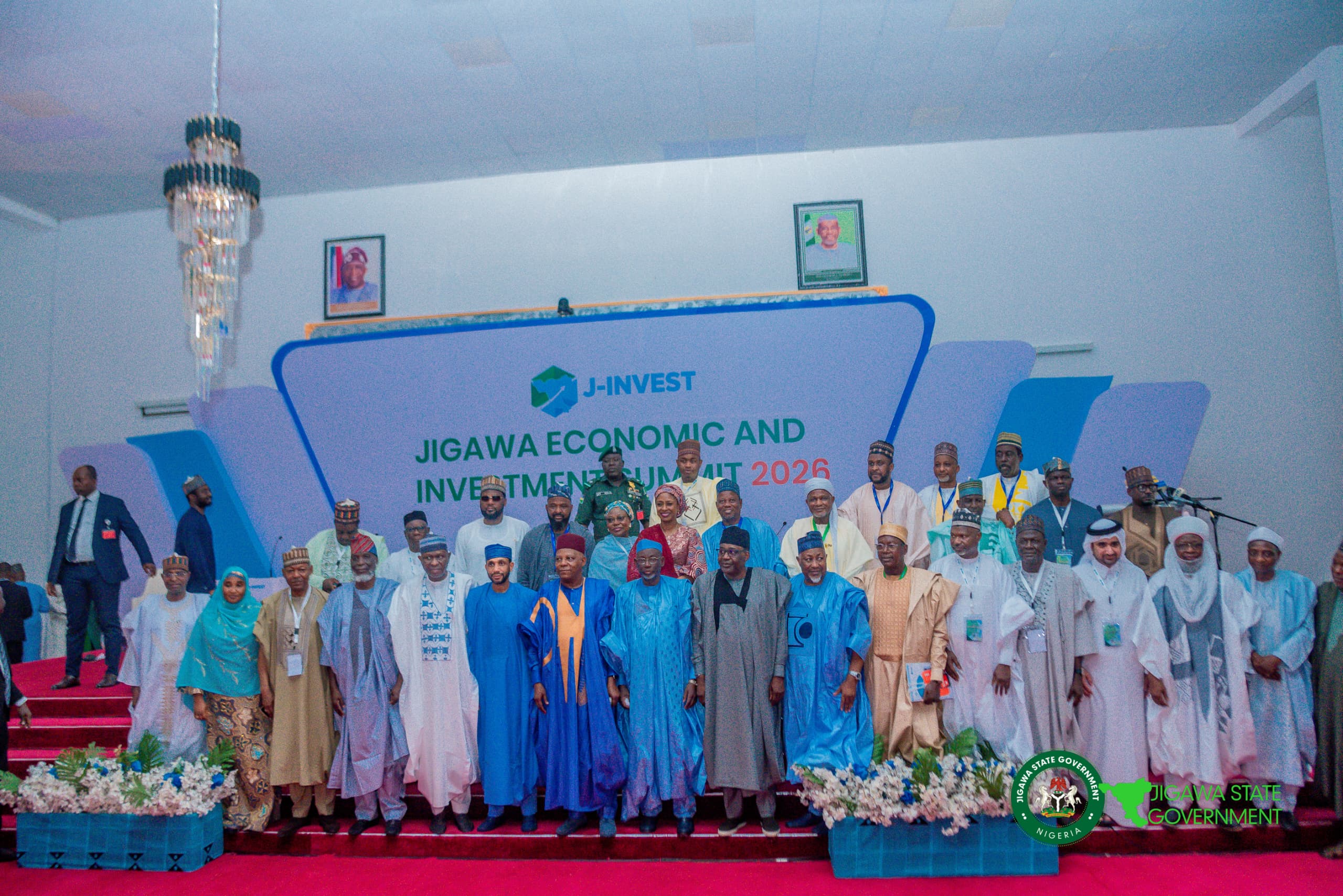
Speaking at the opening of the Second Jigawa State Economic and Investment Summit (J-INVEST 2026) in Dutse, Vice President Kashim Shettima said recent reforms introduced by the administration of President Bola Ahmed Tinubu are beginning to restore investor confidence and position Nigeria for sustainable economic growth.
The Vice President, who was received at Dutse International Airport by Governor Umar Namadi alongside senior government officials, noted that the administration had taken difficult but necessary decisions to address structural challenges in the economy and create a more competitive investment climate.
According to him, reforms in the foreign exchange market have eliminated long-standing distortions that discouraged investors, while initiatives under the Presidential Enabling Business Environment Council (PEBEC) have simplified business registration processes and reduced the cost and time required to establish businesses in Nigeria.
Shettima also cited the Business Facilitation Act as a major step towards improving transparency, predictability and efficiency in government institutions, describing it as a critical tool for attracting local and foreign investment.
He said the reforms are already producing positive outcomes, including stronger foreign reserves, improved market transparency and increased confidence from international investors and rating agencies.
The Vice President further highlighted the significance of the Electricity Act 2023, which grants states greater authority to generate and distribute electricity, creating new opportunities for industrialisation and private sector participation.
“We have reformed and liberalized the foreign exchange market, simplified business processes and expanded opportunities for private investment across strategic sectors of the economy,” Shettima said.
The summit attracted business leaders, investors, diplomats, development partners, policymakers and industry stakeholders from across Nigeria and beyond to explore investment opportunities in key sectors of the Jigawa economy.
In his address, Governor Umar Namadi said his administration is strategically positioning Jigawa as one of Nigeria’s most attractive destinations for investment through sustained investments in agriculture, infrastructure, renewable energy and human capital development.
He disclosed that the state has attracted 64 completed investment projects within the last three years, spanning agriculture, manufacturing and renewable energy sectors.
According to the governor, more than 76 percent of the state’s 2026 budget is dedicated to capital expenditure, while over ₦396 billion has been committed to sectors that directly support economic growth, investment and job creation.
Namadi noted that Jigawa remains Nigeria’s leading producer of sesame, hibiscus and wheat, supported by over 411,000 hectares of fertile Fadama land and extensive irrigation infrastructure capable of sustaining all-season farming.
He identified agro-processing, renewable energy, manufacturing, healthcare, logistics, digital commerce and the Maigatari Border Free Zone as key areas offering significant investment opportunities.
Commending the state’s agricultural achievements, Vice President Shettima noted that Jigawa contributed nearly 40 percent of Nigeria’s wheat production during the last farming season.
He, however, stressed the need for increased investment in mechanisation, irrigation systems, improved seedlings and modern agricultural technologies to enhance productivity and strengthen national food security.
The two-day summit is expected to facilitate new partnerships, attract both domestic and foreign investments, and accelerate economic development in Jigawa State.
Stakeholders expressed optimism that commitments made during the summit would translate into tangible projects, employment opportunities and improved livelihoods, reinforcing Jigawa’s ambition to become a leading hub for investment and economic growth in Nigeria.