

















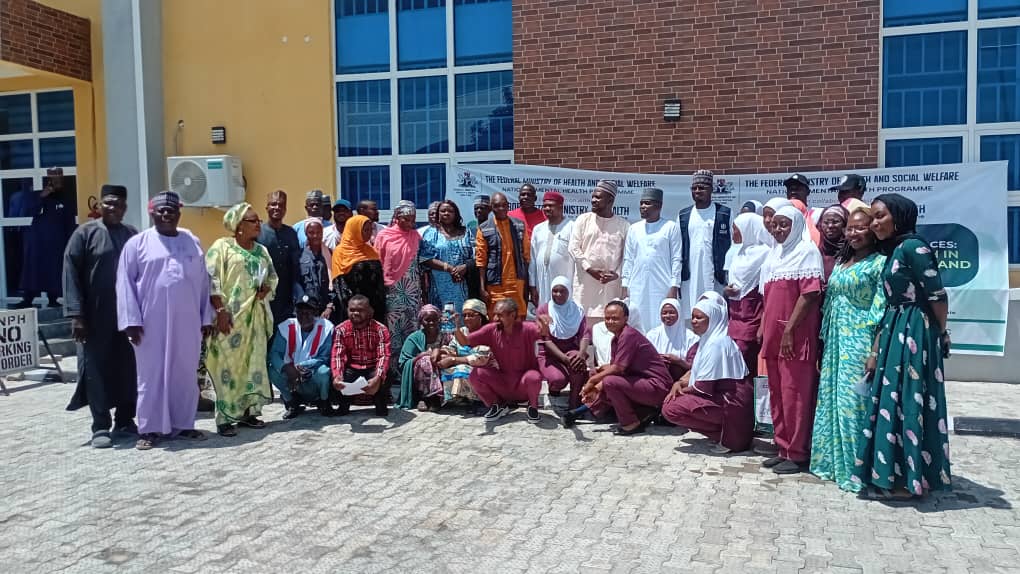
Borno State hosted a two-day workshop to commemorate the 2025 World Mental Health Day.
The event was organized by the Federal Ministry of Health and Social Welfare through its National Mental Health Programme, in collaboration with the Borno State Ministry of Health and Human Services.
It took place on Tuesday at the Federal Neuropsychiatric Hospital in Maiduguri.
Government officials, health experts, international partners, and community leaders attended the event.
The discussions focused on improving access to mental health care, especially in emergency and post-conflict situations.
The theme of this year’s commemoration is “Access to Services: Mental Health in Catastrophes and Emergencies.”
In his remarks, Dr. Ojo Tunde, national coordinator for mental health at the Federal Ministry of Health, emphasized the need to engage with stakeholders in communities most affected by crises.
He said:
“We can’t just sit in Abuja and discuss mental health in emergencies. We came here to have engagement with state actors and partners working on the ground.”
Dr. Tunde added that humanitarian crises often worsen mental health challenges and reduce access to care.
He explained that the workshop aims to strengthen coordination, identify gaps, and develop sustainable strategies for long-term mental health response.
He said, “Our expected outcome is that we will strengthen coordination, knowing that these resources have been there, the partners have been there, but we need to harmonize position.”
Representing the Borno State Commissioner for Health and Human Services, Dr. Gwani Mawali described the event as part of planned activities to strengthen healthcare delivery in the state.
He said, “We are very happy to have federal officials here supporting us. The activities will include outreach services to assist people with mental health needs.”
Other speakers included Mr. Carlos from the International Committee of the Red Cross (ICRC), who highlighted the importance of mental health and psychosocial support in humanitarian work.
He said, “In conflict-affected areas, one in five people experience a mental health condition. Yet in many states, only 2% of the health budget goes to mental health.”
Carlos added that about 60% of Borno’s health facilities are damaged or lack adequate resources.
The District Head of Mashamari in Jere Local Government Area, Abubakar Terab, emphasized the importance of mental health to overall well-being.
He said, “You cannot talk about health without mental health. When people are not in sound mental condition, they cannot be productive, and it affects the society.”
Mrs. Mary Dewan, Technical Officer for Non-Communicable Diseases and Mental Health at the World Health Organization (WHO) Nigeria, reaffirmed WHO’s commitment to supporting the state.
She said, “We have supported training, procurement of psychotropic drugs, and strengthening of primary health facilities using the MHGAP program. Even with funding cuts, we continue to advocate for more domestic resources.”
The commemoration was supported by key partners, including the ICRC, IOM, and WHO.
The event highlighted the importance of ensuring that no one is left behind in accessing mental health care, particularly in conflict-affected and emergency areas.