























The Kano Zonal Director of the Economic and Financial Crimes Commission (EFCC), Ibrahim Shazali, has warned travellers — including businessmen, pilgrims, and tourists — that violating cash movement regulations could lead to forfeiture of funds and up to two years imprisonment.
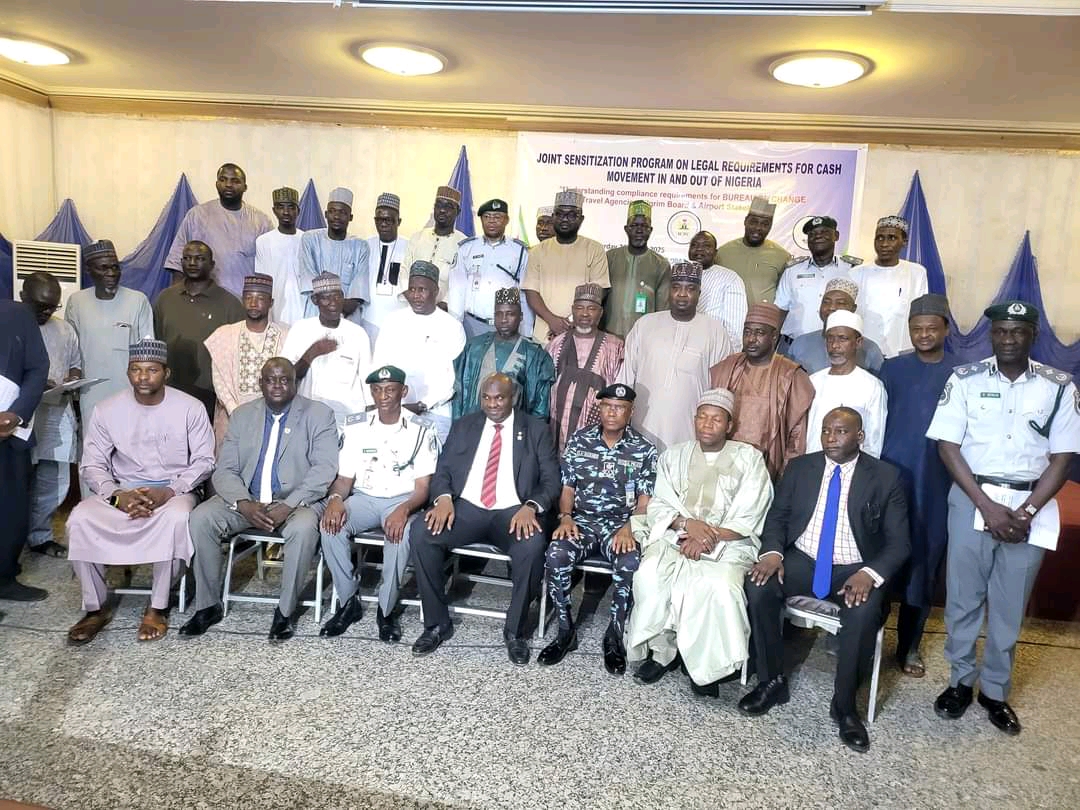
Shazali issued the warning during a strategic sensitisation program on the legal requirements for cash movement in and out of Nigeria.
The event, organised by the Nigeria Customs Service (NCS), Independent Corrupt Practices Commission (ICPC), and EFCC, aimed to educate stakeholders on existing laws and penalties.
He stressed that ignorance of the law would not be accepted as an excuse, noting that many travellers continue to flout cash declaration rules despite stringent regulations.
Legal requirements for cash movement
According to him, “Nigeria, as a signatory to international anti-money laundering conventions, has established strict laws to regulate the movement of cash in and out of the country.
The Central Bank of Nigeria (CBN) Act, Money Laundering (Prevention and Prohibition) Act 2022, and the EFCC Establishment Act provide clear guidelines on cash declarations and penalties for violations.
Despite these laws, many travelers—whether businessmen, pilgrims, or tourists—still engage in illegal cash movements, either out of ignorance or deliberate attempts to evade financial regulations.”
“Today, we will clarify the legal requirements, reporting obligations, and consequences of non-compliance.”
Outlining the legal requirements, Shazali explained, “Any traveler carrying $10,000 (or its equivalent in other currencies) or more must declare it to the Nigeria Customs Service at the point of entry or exit.
“Failure to declare is a criminal offense punishable under the Money Laundering Act. Travelers must provide evidence of the legitimate source of the cash (e.g., bank withdrawal slips, sales receipts, or company financial records). Undeclared or suspicious funds are subject to seizure and forfeiture. No individual or corporate entity is allowed to physically move large sums of cash without proper authorization from regulatory bodies.’
“Electronic transfers are encouraged for high-value transactions to ensure traceability as stipulated in the Money Laundering Prevention and Prohibition Act 2022.”
Consequences for violators
On the consequences of illegal cash movement, Shazali added, “The EFCC, in collaboration with the NCS and ICPC, has intensified surveillance at airports to curb illicit financial flows. Offenders will be detained and charged to court under Section 2 of the Money Laundering Act and Section 13 of the EFCC Act. Undeclared cash will be confiscated permanently by the Federal Government.”
“Convicted individuals risk a minimum of two years imprisonment upon conviction. Frequent violators may also be placed on watchlists, restricting their local and international travels, while businesses and individuals involved in illegal cash movements risk losing banking privileges and public trust.”
He further emphasized the importance of the sensitization program, describing it as “a timely initiative to educate stakeholders on the legal framework and severe consequences of illicit cash transactions in Nigeria.”
Shazali also called on stakeholders to take their compliance roles seriously, stating, “BDC Operators must ensure proper documentation of forex transactions and report suspicious cash movements to the EFCC or NFIU. The Airport Authorities (FAAN, NCAA) should strengthen surveillance and assist law enforcement in monitoring suspicious luggage.”
“Travel Agencies & Pilgrim Boards are to educate travellers on cash declaration requirements before trips, while Businessmen & Corporate Entities are advised to utilise electronic channels for large transactions to avoid legal consequences.
“The fight against money laundering, terrorism financing, and illicit financial flows requires collective effort. The EFCC, NCS, and ICPC will continue to enforce these laws without compromise. I urge all stakeholders here today to comply with these regulations, report suspicious activities, and partner with law enforcement to safeguard Nigeria’s financial system,” Shazali said.
Customs, ICPC pledge continued support
Also speaking at the event, the Resident Commissioner of ICPC, Ahmed Mohammed Wada, explained that the purpose of the sensitization was not to witch-hunt stakeholders, but rather to inform them about the regulations governing the movement of cash to curb money laundering and related crimes.
Earlier, the Customs Area Controller for Kano/Jigawa Command, Comptroller Dalhatu Abubakar, disclosed that the service had intercepted undeclared currencies at Lagos, Kano, Daura borders, and other locations, attributing most of the infractions to ignorance.
He appealed to travellers to comply with the law by completing the currency declaration forms at customs duty posts.
The sensitization program drew participants from across sectors, including Bureau de Change operators, businessmen, airline operators, travel agencies, and pilgrim boards.