












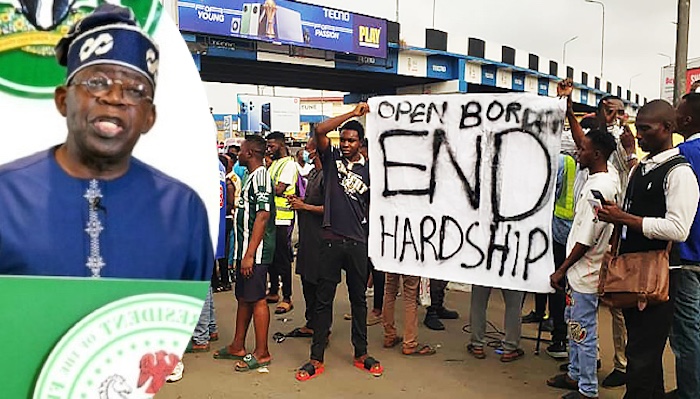
In early August 2024, Nigerians were mobilized across the country under the hashtags #EndBadGovernance.
The stormed the streets and protested the sharp rising cost of living, widespread corruption, insecurity, and perceived policy failures under President Bola Ahmed Tinubu’s administration.
Triggered by reforms such as the removal of fuel subsidies, currency devaluation, and soaring inflation exceeding 35–40%, ordinary citizens faced skyrocketing food and energy prices—prompting a unified call for accountability and policy reversal.
The Protests: August 1–10, 2024Unity and Escalation:
Originally planned to begin on August 1 across all Local Government Areas, demonstrators wore black and white to symbolize solidarity.
Mass gatherings took place in major cities including Lagos, Abuja, Kano, Port Harcourt, and Kaduna.
In Lagos, by midday on August 2, commercial centres from Ojota to Ikeja were deserted, as shops closed, markets emptied, and transport systems halted. Protest slogans such as “ebi npa wa o” (“we are hungry”) echoed alongside demands to reverse fuel price hikes, cancel tuition increases, and eradicate institutional corruption.
Crackdowns and alleged Violence:
While the protests began peacefully, security forces responded with tear gas, barricades, and arrests—particularly in Abuja at Eagle Square and Unity Fountain.
Some participants, including a nursing a mother and her infant, were detained.
In Kano State, the unrest escalated into property damage as some protesters vandalized government offices, including the NCC building.
Notably, a few demonstrators were seen waving Russian flags, raising questions about potential foreign influence or deliberate provocation.
Authorities used live ammunition to disperse crowds, resulting in multiple casualties. Curfews were imposed in several northern states, including Kaduna and Niger.
Casualties, Arrests, and Legal Fallout
At least 22 to 24 protesters were reported killed—13 on the first day alone—with fatalities occurring in Kano, Niger, Kaduna, Borno, Jigawa, and Katsina states.
Approximately 76 individuals, including 30 minors, were arrested and charged with offenses ranging from treason to inciting mutiny.
While minors were later granted bail, trials are ongoing. Human rights organizations, including Amnesty International, condemned the excessive use of force and called for transparent investigations and justice for the victims.
Protesters’ Demands
Protesters issued a clear list of demands, including:
• Reinstating fuel subsidies and lowering fuel and electricity prices
• Reducing government and National Assembly expenditures
• Lowering food costs and investing in agriculture
• Addressing insecurity, kidnappings, and internal displacement
• Restoring fair public service wages and reversing anti-poor economic policies
Reflection and Impact
Although decentralized and loosely coordinated, the protests spotlighted deep-seated frustrations with neoliberal economic policies and governance failures.
Lacking centralized leadership or organized crowdfunding, the movement nonetheless gained national traction.
Divergent agendas occasionally hindered cohesion, but the protest successfully brought long-ignored issues into public discourse.
It also attracted international attention and prompted limited government engagement.
Human rights groups continue to demand justice, particularly for minors facing criminal charges and for victims of state violence.
Were the Goals Achieved?
In the aftermath, many have questioned whether the protests achieved tangible results.
The government, as reflected in President Tinubu’s address, did not yield to the protesters’ demands—despite their being led largely by a young and increasingly disillusioned population.
The protests also exposed stark regional and socioeconomic disparities, particularly between northern and southern Nigeria.
While the South has seen relatively more economic development, the North continues to grapple with poverty, underdevelopment, and insecurity.
If left unaddressed, this imbalance poses a serious threat to national unity and stability.
Still, there is hope that the government will seize this opportunity to address these long-standing issues, especially in the North, where demographic pressures could have far-reaching consequences.
The Way Forward
Looking ahead, the administration must adopt a new approach to governance—one that moves beyond protest suppression and embraces meaningful citizen engagement, especially with the youth.
Youth participation in governance is not merely aspirational; it is essential for ensuring accountability and driving sustainable reform.
The government must also take deliberate steps to reduce the cost of governance and move away from reactive, short-sighted policymaking.
Instead, it should foster a more inclusive, transparent, and consultative process—particularly when introducing major economic reforms.
One of the most important lessons from these protests is the need for political leaders in developing countries like Nigeria to strike a careful balance between the economic prescriptions of international financial institutions such as the IMF and World Bank, and the well-being of their citizens.
While such institutions provide critical support and guidance, their recommendations often clash with the immediate realities of local populations.
Governments have a duty to prioritize the welfare of their people—even if it means resisting external pressures.
It is time for Nigerian leaders to show that they value the voices of the people above all else, and to take meaningful, people-cantered steps that ensure those voices are heard—and heeded.
The #EndBadGovernance protest of 2024 has left an indelible mark on Nigeria’s political landscape.
It has set the stage for a new era of civic engagement—one in which the demands of the people can no longer be ignored. Whether the government listens and acts will determine whether this moment becomes a turning point—or merely another missed opportunity.