























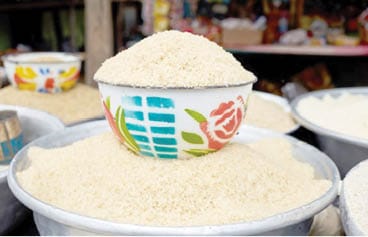
Residents of Sokoto State are witnessing a welcome decline in the price of rice as a standard measure (mudu) drops from ₦4,000 to ₦3,200 across major markets in the state. The 20 per cent reduction, observed in March 2026, is offering relief to households grappling with persistent food inflation.
Findings from visits to key grain hubs in the state show that the price adjustment is gradually reflecting in retail and wholesale outlets. Traders attribute the development to increased supply within the domestic market and shifts in global pricing trends. Similar patterns are also being reported in other commercial centres across the country.
Market analysts link the drop partly to India’s renewed activities in the global export space earlier this year, which pushed international rice prices downward. The surplus in supply has filtered into West African trade corridors, influencing local market dynamics and compelling dealers to adjust prices.
In addition, farmers in northern Nigeria are currently harvesting a strong dry-season crop, supported by government-backed irrigation schemes and fertilizer subsidies introduced in late 2025. The increased availability of paddy rice has enabled millers to reduce production costs, a move that is now being reflected at the consumer level.
At Tsohuwar Kasuwa Market in Sokoto, traders say business activities have improved compared to previous weeks when high prices slowed patronage.
“Last month, we were struggling to move stock because people simply couldn’t afford a full measure at ₦4,000,” says Alhaji Musa, a wholesale grain dealer. “Today, with the price at ₦3,200, we are seeing more families buying in bulk again. It’s better for everyone when the volume of trade is high.”
Consumers also expressed cautious optimism over the development, noting that the price difference could ease pressure on household budgets.
“When you buy five or ten measures for the month, that ₦8,000 saving goes toward school fees or electricity bills. We hope this isn’t just a temporary flash in the pan,” she noted while shopping.
Despite the positive trend, agricultural economists warn that sustaining lower prices will depend on continued investment in local production. They caution that if farm-gate prices fall excessively, producers may reduce planting during the upcoming wet season, potentially leading to fresh supply shortages later in the year.
For now, however, the downward trend remains steady, raising hopes that other staple foods such as beans and maize may follow a similar path and contribute to easing Nigeria’s overall food inflation rate.