

















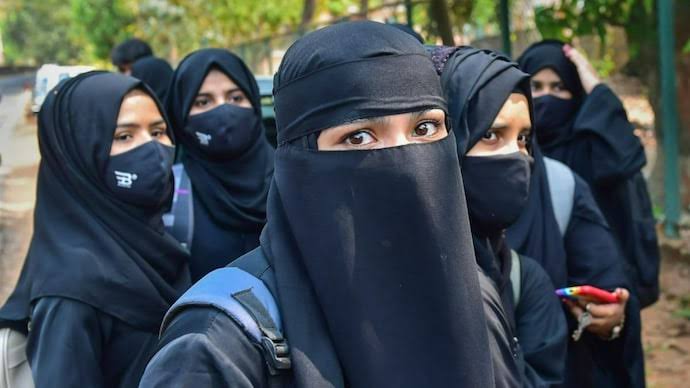
Protests have erupted in Azerbaijan after schools began restricting students and teachers from wearing the Muslim headscarf, following the introduction of a new dress code based on the country’s secular principles.
The amendment, approved last month, does not explicitly ban the hijab but prohibits school clothing considered inconsistent with the government’s interpretation of secularism.
The restrictions have triggered public outrage, with reports that some students and teachers have been denied entry to schools for wearing headscarves.
Zahra Hasanova, a teacher affected by the directive, told Al Jazeera that she had been informed she could no longer wear the hijab at school.
“To be honest, I am a little emotional. I am hurt,” she said.
“[The hijab] is a personal choice, and if one day I want to take it off, that should be my choice too.”
According to the state-run Azerbaijan Press Agency, the amendment to the dress code for students in public schools is intended to establish a uniform standard that reflects the country’s secular principles.
The agency also said clothing representing Azerbaijan’s history, culture and national and moral values could be worn during celebrations, subject to approval by the relevant school pedagogical council.
Azerbaijan’s constitution defines the country as a secular state while guaranteeing freedom of religion. Approximately 96 per cent of its population identifies as Muslim.
Protests spread across schools
The restrictions have prompted demonstrations and a social media campaign, with videos circulating online showing students crying and embracing teachers who were reportedly prevented from entering school premises.
Local media reported that students at at least two schools boycotted classes in protest against the new rules.
Imprisoned journalist Polad Aslanov has also begun a hunger strike over the restrictions. Aslanov, who was sentenced to 113 years in prison after being convicted of high treason in 2020, said he was protesting what he described as violations of constitutional rights.
“Despite being in prison, I am raising my voice against the trampling of our constitutional rights by employing the only means of struggle available to me – a hunger strike!” he wrote in a message shared on Facebook by his wife, Gulmira Aslanova.
Meanwhile, reports of internet blackouts in the country have not been confirmed by monitoring organisations, including the Open Observatory of Network Interference and NetBlocks.
Turkiye protests restrictions
Opposition to the restrictions has also spread to neighbouring Turkiye, where demonstrations have drawn comparisons with the country’s 1997 political crisis, when women wearing headscarves were barred from universities and faced restrictions in public-sector employment.
Last week, demonstrators gathered outside Azerbaijan’s consulate in Istanbul, urging authorities in Baku to reconsider the measures affecting Muslim women.
Azerbaijani President Ilham Aliyev appeared to criticise the protests in a speech at a congress of his ruling New Azerbaijan Party, warning against attempts to “interfere with our lifestyle” without directly naming Turkiye, a close ally of Azerbaijan.
Turkish authorities have not officially responded to Aliyev’s remarks.
However, Turkish President Recep Tayyip Erdogan, in his September 23 address to the United Nations General Assembly, spoke about what he described as increasing discrimination against Muslim women.