

















Zamfara State Government, in partnership with the Agro Climatic Resilience in Semi-Arid Landscapes (ACReSAL), is dedicated to promoting environmental sustainability and building resilience across the state.
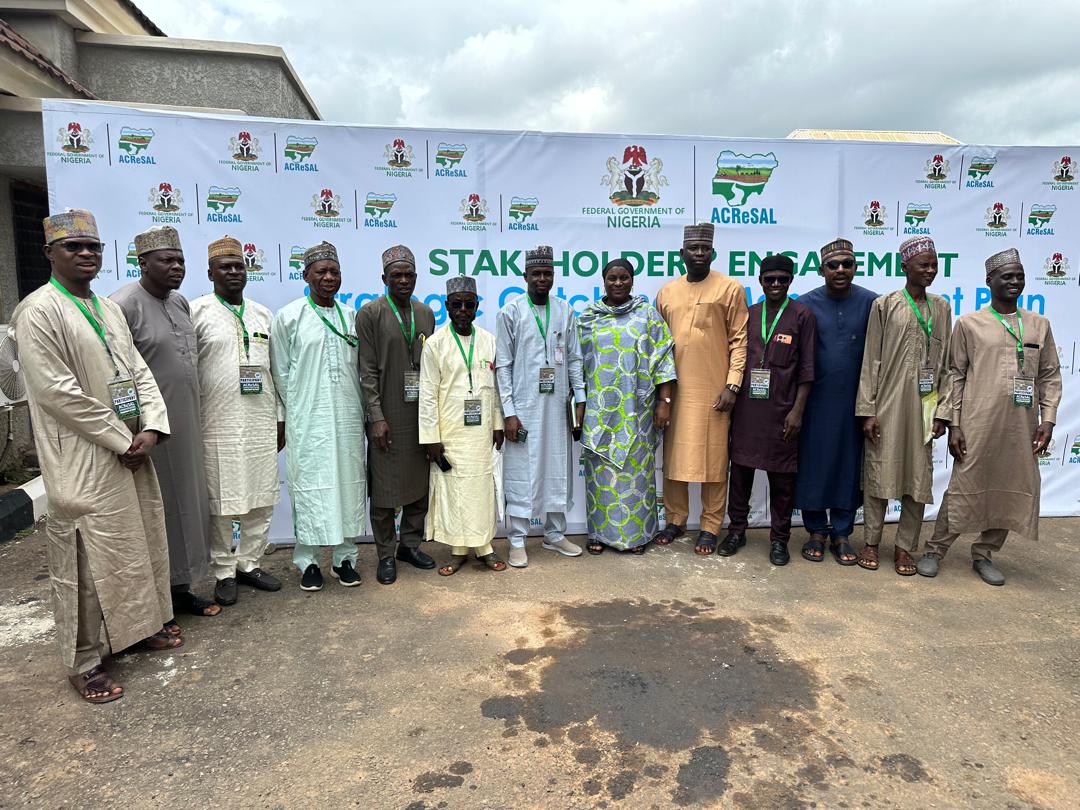
This commitment was expressed by the Commissioner of the Ministry of Environment and Natural Resources, Alhaji Kasimu Sani Shantalin Kaura, during a stakeholder engagement session aimed at developing Strategic Catchment Management Plans (SCMPs) for five major river basins.
The event was held in Ilorin, the capital of Kwara State.
In a statement by the Permanent Secretary of the Ministry, Alhaji Rilwanu Musa Zurmi, it was emphasized that the session’s objective is to create comprehensive catchment strategies for the Malenda Kaduna-Mariga river basin.
Commissioner Shantalin Kaura characterized the SCMP process as imperative for ensuring watershed sustainability, referring to these watersheds as the “lifeline of communities, economies, and ecosystems.”
He reiterated the State’s strong commitment to the ACReSAL initiative and expressed optimism regarding the anticipated benefits for rural communities and the environment of Zamfara State.
The ACReSAL initiative aims to develop 20 strategic catchment plans across 19 implementing states and the Federal Capital Territory (FCT).
These SCMPs are designed to pinpoint intervention areas, assess existing resources, map potential threats, and create a comprehensive strategic response to tackle catchment degradation.
“Watershed management is not merely an environmental necessity; it is a socioeconomic imperative,” Shantalin Kaura stated.
The project is funded by the World Bank and it’s implemented alongside both federal and state governments, addressing issues such as land degradation, water resource conservation, restoration of degraded ecosystems, and enhancing livelihoods in Nigeria’s climate-vulnerable northern regions.
In their remarks, the Commissioner of Agriculture, Ya’u Haruna Gamji, and Permanent Secretary, Sa’adatu Abdu Gusau, acknowledged the significant contributions of the State Governor, Dr. Dauda Lawal, as well as the World Bank’s support in combating land degradation and improving livelihoods within the state.
They further noted that the ACReSAL project stands as one of Nigeria’s most ambitious environmental programs, focusing on restoring degraded landscapes, mitigating climate risks, and enhancing the adaptive capacity of millions residing in semi-arid areas.
During the forum, the National Project Coordinator of ACReSAL, Abdulhamid Umar, through his representative Adam Shettima, stressed the essential role stakeholders have in ensuring the project’s success and sustainability.
“Stakeholder inputs are crucial in developing bankable catchment plans that will attract investment and deliver tangible results at the community level,” he remarked.