










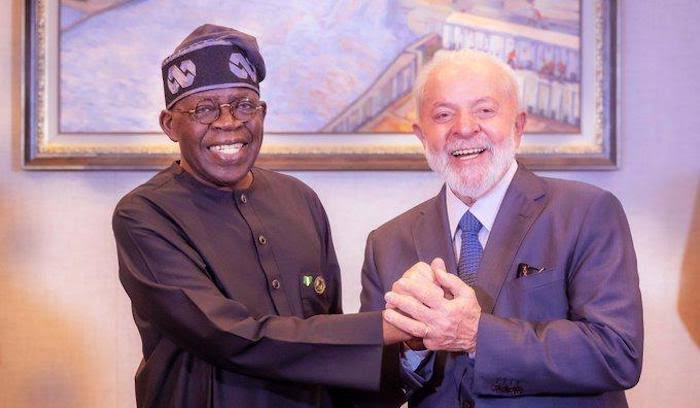

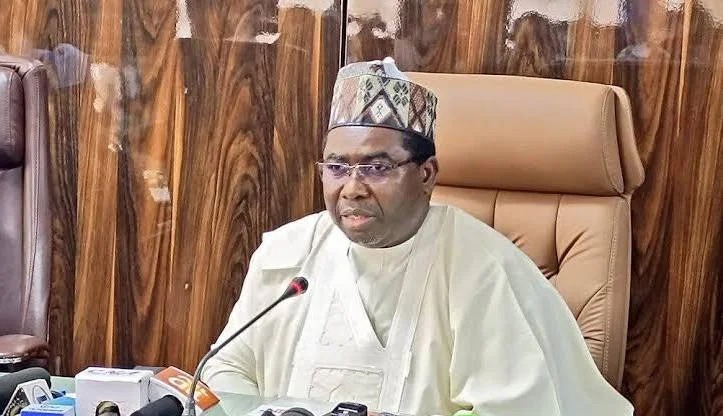







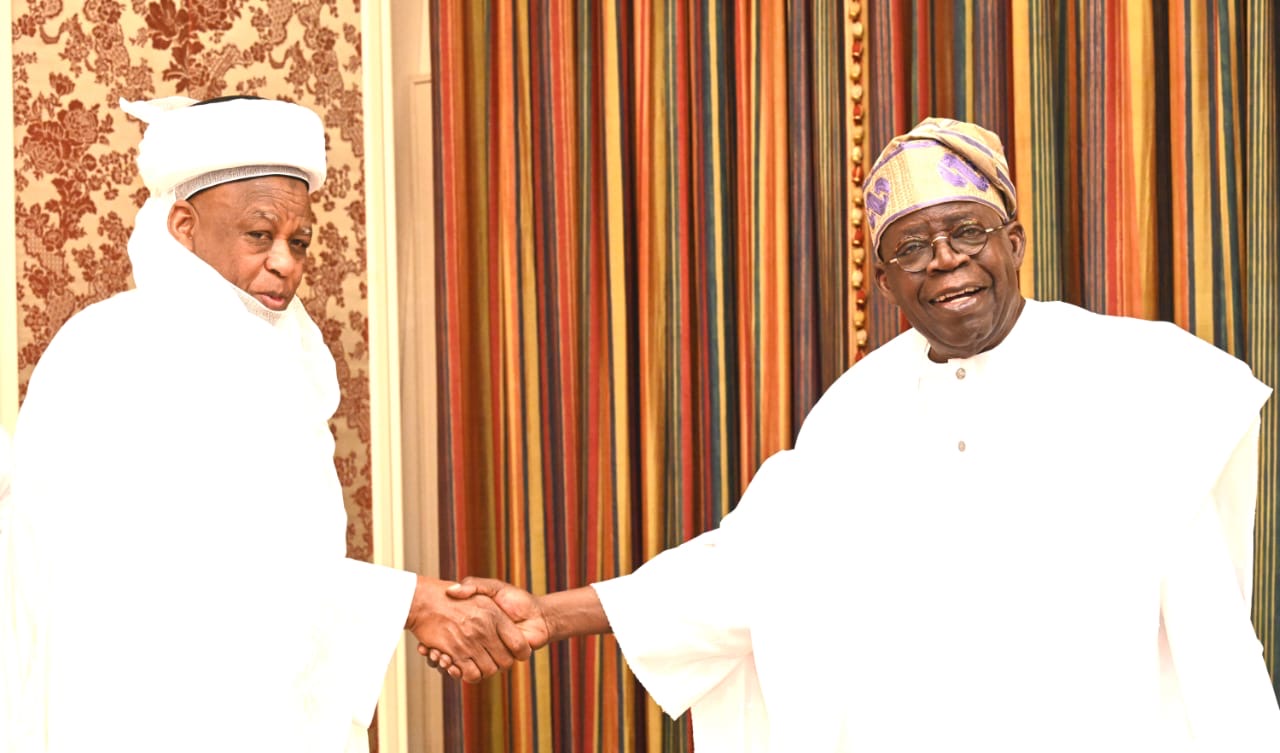
President Bola Tinubu has congratulated the Sultan of Sokoto, Muhammad Sa’ad Abubakar III, on the 20th anniversary of his ascension to the throne.
He described the monarch as a respected moral figure, an advocate of moderation and a trusted adviser to Nigerian leaders across different generations.
In a congratulatory letter personally signed by the President on Monday, Tinubu commended the Sultan’s two decades of leadership, noting that the historic institution of the Sokoto Caliphate had not only been sustained but also strengthened and utilised to promote peace, unity and national development.
He wrote, “You have been more than a traditional ruler. You have been a moral authority, a bridge between faiths, a voice of moderation and a steady counsellor to leaders across the country.”
Tinubu acknowledged the Sultan’s contributions as President-General of the Nigerian Supreme Council for Islamic Affairs and Co-Chairman of the Nigeria Inter-Religious Council, observing that his leadership had continued to foster understanding between Christians and Muslims.
“You have consistently stood for religious harmony and tolerance. Under your leadership as Co-Chairman of the Nigeria Inter-Religious Council, Christians and Muslims have found common ground, and our diversity has become a source of strength rather than division,” he said.
The President further recognised the Sultan’s efforts in promoting peace across Northern Nigeria and the Sahel, advancing girl-child education, supporting farmers and providing discreet assistance to poor and vulnerable members of society.
Reflecting on their personal relationship, Tinubu said he cherished his friendship with the Sultan and appreciated the spiritual and political counsel he had received from the traditional ruler.
“Your counsel has been honest, patriotic and always in Nigeria’s best interest.
“Thank you for your support and your prayers for our nation,” the President wrote.
He offered prayers for the Sultan’s continued good health, longevity and greater wisdom, while expressing optimism that his reign would remain a source of peace for Sokoto, unity for Nigeria and honour for the Muslim faithful.
“May your reign continue to bring peace to Sokoto, unity to Nigeria, and honour to the Ummah,” Tinubu wrote.
Muhammad Sa’ad Abubakar III became the 20th Sultan of Sokoto on November 2, 2006, following his ascension to the throne of the Sokoto Caliphate.
His emergence followed the death of his predecessor, Muhammadu Maccido, who lost his life in ADC Airlines Flight 053, which crashed in a cornfield near Nnamdi Azikiwe International Airport in Abuja on October 29, 2006.
The crash claimed 96 lives out of the 105 people aboard the aircraft, including the 78-year-old monarch.
A graduate of the Nigerian Defence Academy, Kaduna, Sa’ad Abubakar III joined the Nigerian Army as a commissioned officer in 1974 and advanced through the ranks during a military career that lasted almost three decades.
He occupied several command and staff positions within Nigeria and participated in United Nations peacekeeping operations abroad before retiring from the military as a Brigadier-General in December 2006.
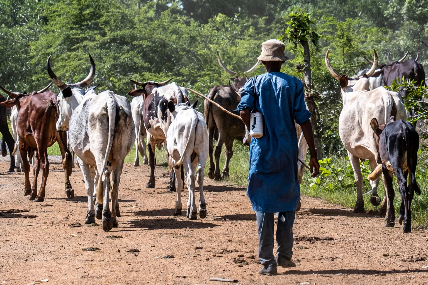
Throughout his 20-year reign, he has played a prominent role in peacebuilding efforts involving some of Nigeria’s most sensitive conflicts, including clashes between farmers and herders, the Boko Haram insurgency in the North-East and ethno-religious tensions across the Middle Belt.
As President-General of the NSCIA, he occupies the highest leadership position in the country’s Islamic religious establishment.
In his capacity as Co-Chairman of the Nigeria Inter-Religious Council, he shares leadership of the country’s leading platform for Christian-Muslim engagement with the Catholic Bishops’ Conference of Nigeria.
The Sultan has also consistently advocated girl-child education, an issue that has historically attracted opposition in some parts of Northern Nigeria.
The Sokoto Caliphate was founded in 1804 by Sheikh Usman Dan Fodio following a jihad that spread across the Hausa states in what is now northern Nigeria.
It remains one of the most prominent Islamic traditional institutions in sub-Saharan Africa, with the Sultan exercising spiritual leadership over millions of Muslims across the country.