












By Muhammad Usman
As someone who works at grassroots level on community development and child rights, I have spent considerable time engaging parents and families, and I have witnessed a painful pattern repeatedly across households with no stable source of income, children are often the first to pay the price. They miss school, enter informal work, struggle to access healthcare and grow up in conditions that reproduce the same poverty their parents experienced.
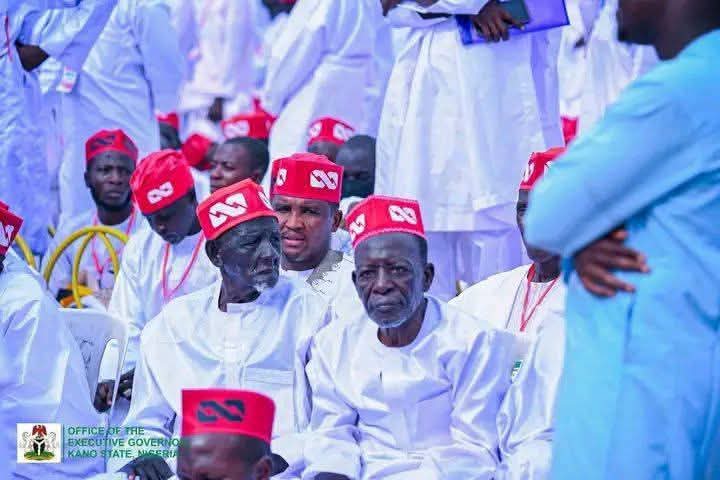
In my opinion this is why Kano State’s recent Auren Gata mass wedding of 1,500 couples deserves serious public scrutiny. The state reportedly set aside ₦1.5bn for the programme, which brought together 3,000 beneficiaries. I struggle hard to understand the development logic behind spending such a huge amount to establish marriages without first addressing the economic vulnerability that made many of these marriages difficult to begin with. If a man cannot independently meet the basic economic demands of establishing a household, how does paying for his marriage make him better prepared to feed, house, educate and protect a wife and the children who may follow?
Government should certainly support people facing genuine hardship, but removing the cost of the wedding is not the same thing as removing the poverty that threatens the family afterwards. At its core, this is a question of public responsibility: is government supposed to finance a ceremony, or create the conditions in which families can actually survive?
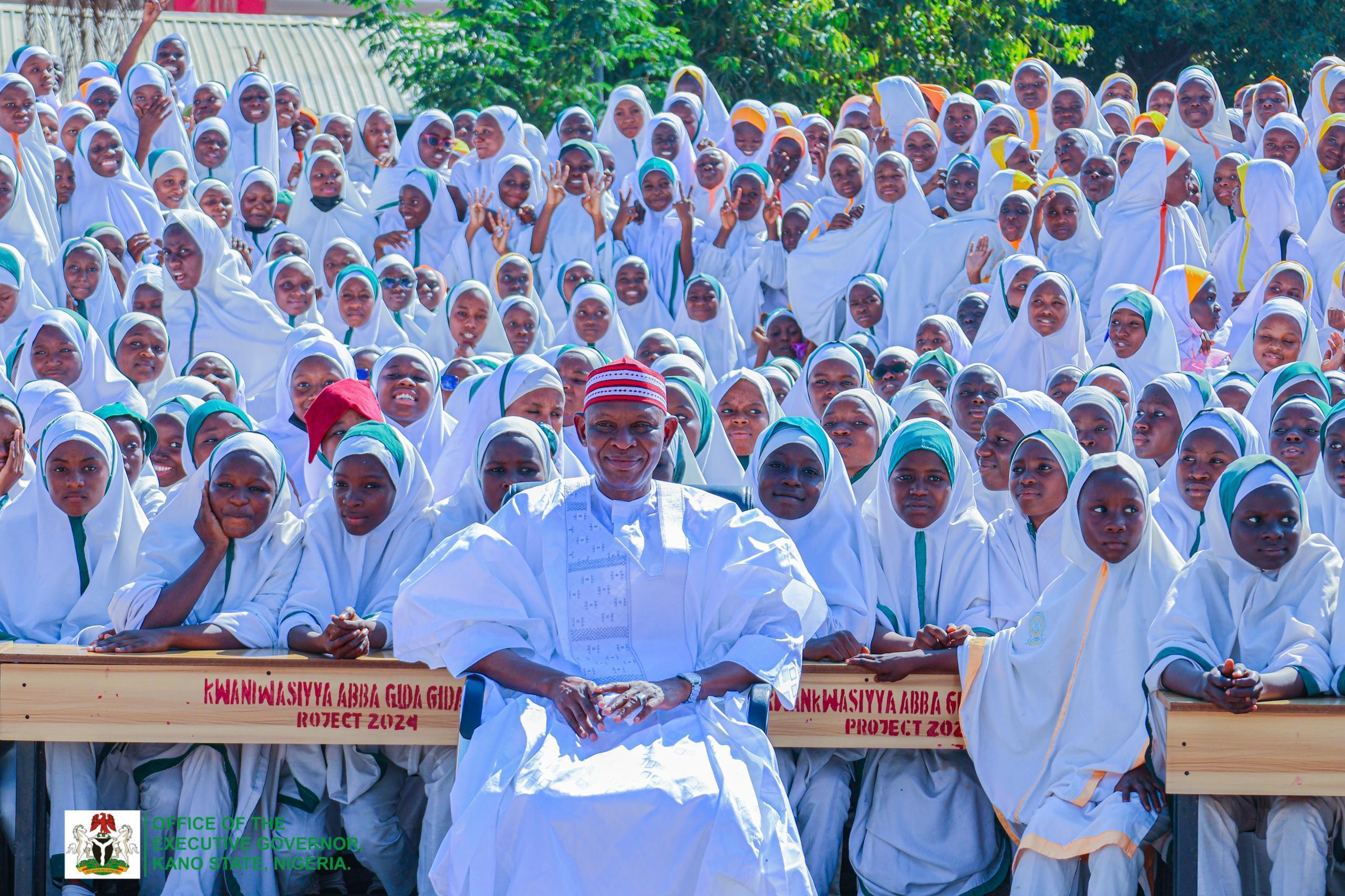
The ₦1.5bn expenditure becomes even harder to defend when placed beside Kano’s education crisis. UNICEF reported in 2025 that Kano had nearly 900,000 out-of-school children (this I believe is just a conservative estimates), while Kano, Katsina and Jigawa together accounted for about 16 percent of Nigeria’s 10.2 million out-of-school children.
The state government has itself acknowledged serious education infrastructure problems, announcing plans to construct and renovate schools while pointing to dilapidated infrastructure, overcrowded classrooms and inadequate teachers. They are children sitting in inadequate classrooms, parents struggling to keep them in school and communities waiting for public investment.
Against this background, spending ₦1.5bn on a mass wedding looks less like a development priority and more like a misplacement of scarce public resources. The state should be able to explain why this intervention was considered more urgent than interventions that could directly reduce poverty, strengthen education and protect children from the consequences of household economic instability.
There is also a religious question that deserves a more honest conversation. I haven’t find one single Islamic principle that stated if a man who lacks the means to establish a household should simply be married through public sponsorship, and I have not found such a principle.
THE QUR’AN SAYS: “AND LET THOSE WHO FIND NOT THE MEANS FOR MARRIAGE KEEP THEMSELVES CHASTE UNTIL ALLAH ENRICHES THEM OF HIS BOUNTY” (QUR’AN 24:33).
In a Hadith narrated by the Prophet (S.A.W) in Sahih al-Bukhari 5065, similarly addressed young people by saying that whoever is able to marry should marry, and whoever is not able should fast.
This does not mean that Islam forbids helping a poor person marry, nor does poverty make someone unworthy of marriage. Rather, the texts point to an important principle: ability and responsibility matter. Marriage is not merely the day of nikah, it comes with continuing obligations toward a spouse and children. That is precisely why government assistance should focus on building the capacity to carry those responsibilities.
If Kano State Government can identify 3,000 beneficiaries, screen them, organized them across 44 local government areas and mobilize ₦1.5bn, while not build an economic empowerment programme around the same people paving way to access vocational skills, apprenticeships, productive assets, business support, financial literacy and sustained monitoring of household income. That would help people become economically stronger before and after marriage, rather than treating the wedding itself as the solution.
Kano is running out of time. Every year a child remains out of school is a year of lost learning and a reduction in that child’s future options. Every household trapped in extreme economic insecurity creates another environment in which children can become vulnerable to dropout, child labour and other forms of deprivation.
The government should therefore publish the full cost, beneficiary-selection criteria and expected outcomes of Auren Gata, and it should tell citizens what measurable changes it expects to see in the lives of the beneficiaries three, five and ten years from now.
The real question is not whether the 1,500 couples deserved happiness. They do. The question is whether ₦1.5bn was the most responsible way to use public money to help them achieve it. In my view, it was not. Kano does not need government to simply make it easier for vulnerable people to start families; it needs government to make it possible for those families to remain stable, productive and capable of keeping their children in school. A wedding can create a household. Economic security is what gives that household a future.
Opinion by Muhammad Usman