






At least 17 buildings have been pulled down by the Lagos State Government for encroaching on the right-of-way (RoW) of the Ikota River alignment.
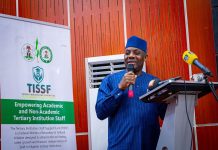
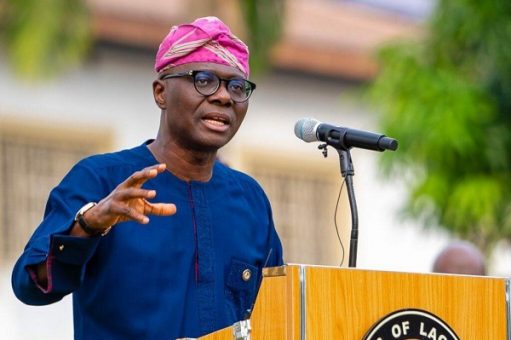
The Commissioner for the Environment and Water Resources, Tokunbo Wahab, led an enforcement and monitoring team, joined by journalists, to the location on Saturday.
Wahab warned residents against practices that endanger the environment, stressing that nature always reacts to human negligence and illegal reclamation of wetlands.
He revealed that the ministry had earlier received reports about unlawful reclamation efforts aimed at narrowing the river’s natural course.
“We stopped them then, but we were alerted again recently that the encroachment had resumed aggressively, with attempts to sell land to unsuspecting buyers,” Wahab said.
The commissioner noted that the government had now taken firm measures to stop the encroachment and remove all illegal structures along the alignment.
He added that those responsible for the illegal activity would be tracked and prosecuted in line with existing laws.
Addressing the recurring issue of flooding, Wahab said that while it is impossible to entirely eliminate flooding in a coastal state like Lagos—bordered by the Atlantic Ocean, lagoons, and rivers—the government continues to invest in infrastructure to reduce its effects.
“What we can do is reduce its effects through resilient infrastructure, which Governor Babajide Sanwo-Olu has consistently provided and maintained,” he said.
Despite continuous efforts to clear and maintain drainage systems daily, Wahab lamented that some individuals still block waterways for selfish interests.
He pointed out property number 156 as a case in point, noting that it obstructed the coastal road alignment and hindered the natural water flow.
“That property will be cleared to allow the Ikota channel to discharge freely into the Lagos Lagoon,” he added.
Wahab emphasized that demolition is not always the government’s first choice, as it usually explores corrective actions.
“Sometimes we ask developers to produce practical designs for stormwater discharge, but they must bear the cost, not taxpayers,” he said, describing it as irresponsible for the government to fix issues caused by private developers who profit from breaching environmental laws.
During an inspection of the Lekki–Epe corridor, Wahab expressed concern over widespread encroachment on wetlands originally intended to store excess rainfall.
He said drone assessments had revealed severe damage to the wetland area, including the destruction of coconut trees that helped stabilize the soil.
According to him, demolition notices were issued on 26 September to violators ahead of scheduled transport infrastructure projects on the same route.
He explained that the visit was aimed at aligning environmental protection with the Ministry of Transport’s Green Line Rail initiative.
Additionally, the Commissioner for Transport, Oluwaseun Osiyemi, noted that the Green Line Rail project, which will stretch from Marina to Epe, is expected to begin in December after consultations and feasibility studies.
Osiyemi mentioned that some car dealers granted temporary use of power line spaces had breached conditions by erecting permanent buildings on wetlands.
“As a state, we must enforce compliance and protect the environment while advancing our transport development agenda,” Osiyemi said.