







The Kaduna State Government has reaffirmed that it will not take fresh loans to finance its 2026 budget, insisting that the administration of Governor Uba Sani remains committed to prudent financial management.
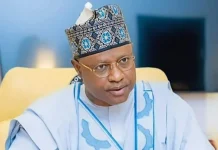
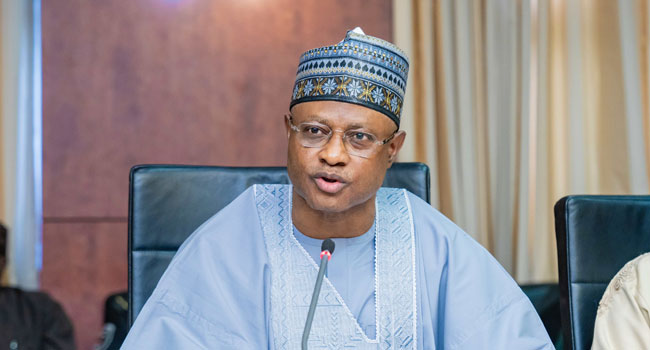
The Commissioner for Planning and Budget, Hon. Mukhtar Ahmed Monrovia, made this known while clarifying reports suggesting that the state planned to borrow to fund the 2026 fiscal plan.
“Governor Uba Sani has not taken any new loans since assuming office,” Monrovia said. “The 2026 budget will be financed through statutory allocations, Internally Generated Revenue (IGR), and grants.”
In a statement issued by the Governor’s Chief Press Secretary, Malam Ibraheem Musa, the commissioner explained that public confusion arose from a misunderstanding of the loan drawdown component reflected in the budget.
“What the government is doing is drawing from loans contracted by previous administrations,” he explained. “No new loan has been obtained by this administration.”
Monrovia further noted that cancelling existing loan agreements before maturity would be counterproductive, as it would attract penalties higher than the interest currently being serviced.
“Premature cancellation of these loans would impose heavier financial burdens on the state,” he said. “That is why continued servicing remains the most prudent option.”
Despite ongoing financial pressures, the commissioner said the Uba Sani administration has remained consistent in meeting its debt obligations.
“Even under severe financial strain, this government has continued to service inherited loans, including both principal and accrued interest,” he stated.
He stressed that the administration’s focus on fiscal discipline and inclusive development would not be derailed by misinformation.
The commissioner also commended Governor Sani for aligning the state’s fiscal year with the calendar year, noting that implementation of the 2026 budget commenced on January 1.
Governor Uba Sani signed the 2026 Appropriation Bill into law on December 22, 2025. The ₦985.9 billion budget allocates 25 per cent to education the largest share underscoring the administration’s view of education as a key driver of poverty reduction and sustainable development.
Of the total budget size, ₦698.9 billion, representing 70.9 per cent, is earmarked for capital expenditure to boost infrastructure, economic growth, and service delivery, while ₦287 billion, or 29.1 per cent, is set aside for recurrent expenditure.