










Health experts have urged the Kaduna State Government to fully implement and institutionalise its malaria strategic plan to achieve total elimination of the disease.
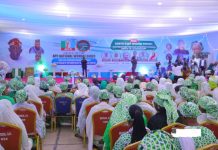
The call was made at a weekend workshop in Kaduna on “Promoting Evidence-Informed Policymaking and Implementation to Facilitate Monitoring, Learning, and Evaluation (MLE) for Malaria Subnational Tailoring.”
The event was organised by the African Institute for Health Policy and Health Systems, in partnership with the David Umahi Federal University of Health Sciences (DUFUHS), Ebonyi State, the Solina Centre for International Development and Research, and the Bill and Melinda Gates Foundation.K
DUFUHS Vice Chancellor, Professor Jesse Uneke, commended Kaduna’s efforts against malaria and praised stakeholders dedication.
“The enthusiasm shown by participants is vital for strengthening the malaria strategic plan and shaping the next National Malaria Strategic Plan (2026–2030),” he said.
Uneke urged stakeholders to assess the current NMSP 2021–2025 objectively and suggest ways to improve implementation using data-driven approaches.
Representing the Health Commissioner, Dr. Aishatu Abubakar Sadiq, Permanent Secretary, Kaduna State Ministry of Health, thanked the organisers for sustaining engagement on malaria control.
“We must be proactive and tailor interventions appropriately,” she said, encouraging stakeholders to embrace innovation and adapt to positive change.
Experts Identify Gaps
In his lecture, Prof. Uneke traced malaria policy evolution in Nigeria from the 1950s to the present and called for targeted, evidence-based programming instead of a one-size-fits-all approach.
Health systems expert Dr. Onyedikachi Chukwu presented a SWOT analysis of Kaduna’s malaria programme.
Strengths identified include micro-planning, supportive supervision, social behaviour change communication, and routine data review.
Weaknesses such as poor data quality, stockouts of malaria commodities, and mismatched use of MRDTs and ACTs were flagged for urgent action.
“Progress is commendable, but the gaps must be closed to achieve a malaria-free Kaduna,” Dr. Chukwu said.
Participants resolved to strengthen coordination, funding, and accountability mechanisms to sustain progress towards a malaria-free Kaduna State.