























Nigeria’s inflation rate has surged to 24.23% in March 2025, driven by increasing costs of basic food items and energy. This spike marks a 105 basis point rise from February’s 23.18%, according to the National Bureau of Statistics (NBS).
The rate of increase in average price levels was higher in March than in February, indicating renewed inflationary pressure.
In January, the NBS updated the weight and price reference periods in calculation of the CPI to make the inflationary gauge more reflective of changes in consumption patterns and the economy generally.
The rebasing did not only brought the base year closer to the current period from 2009 to 2024, it also introduced some critical methodology changes to improve the computation processes.
After the rebasing, inflation dropped from 34.80 per cent in the pre-rebased period of December 2024 to 24.48 per cent in January 2025. It dropped further to 23.18 per cent in February.
In its latest report, NBS recorded 186 basis points changes between the monthly inflation rate, with the month-on-month rate rising from 2.04 per cent in February to 3.90 per cent in March.
The NBS attributed the spike to the rise in costs of food and alcoholic beverages, fuels and electricity, among other items.
Analysts at CardinalStone said the resurgence was due to renewed foreign exchange (forex) pressures amid heightened global risk-off sentiment.
They pointed at foreign portfolio investments (FPIs) outflows and increased dollar demand, which saw naira dropping by 2.4 per cent in March.
Experts also cited increase in price of Premium Motor Spirit (PMS) or petrol, following the temporary suspension of the naira-for-crude swap arrangement.
Food inflation rate stood at 21.79 per cent in March 2025. The composite food index decreased to 21.79 per cent from 23.51 per cent.
Core inflation, which excludes volatile agricultural produce prices and energy, rose to 24.43 per cent from 23.01 per cent.
Specifically, the month-on-month food inflation rose by 50 basis points from 1.67 per cent in February to 2.18 per cent in March.
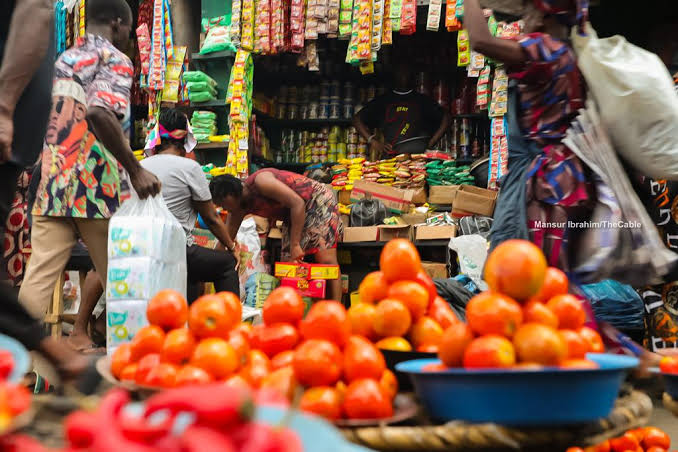
The NBS attributed the increase in food inflation to increases in the average prices of basic food items including ginger, garri, broken rice, honey, crabs, potatoes, plantain flour, periwinkle and pepper amongst others.
On a state-by-state basis, food inflation was higher in Oyo with 34.41 per cent; Kaduna (31.14 per cent) and Kebbi (30.85 per cent).
On the other side, the 9.61 per cent recorded by Bayelsa; Adamawa (12.41 per cent) and Akwa Ibom (12.60 per cent), were the lowest inflation rates.
Analysts expressed concerns that the resurgent inflationary pressure might lead to renewed tightening stance by the Central Bank of Nigeria (CBN).
CBN Governor Dr. Olayemi Cardoso, had at the end of the first Monetary Policy Committee (MPC) meeting in 2025, reiterated the apex bank’s commitment to orthodox monetary policies, noting that the apex bank’s stance will be reflective of the inflationary trend.
With inflation rate dropping in February, the MPC had decided to maintain all key monetary policy parameters, including the Monetary Policy Rate (MPR) at 27.50 per cent, the asymmetric corridor around the MPR at +500/-100 basis points, the Cash Reserve Ratio (CRR) at 50.00 per cent for Deposit Money Banks and 16.00 per cent for Merchant Banks, and the Liquidity Ratio at 30.00 per cent.
Clarifying the impact of the rebased CPI, Cardoso had explained that the lower inflation figure should not be misinterpreted.
He underlined the need to analyse more data before drawing comparisons, noting that the CBN is currently assessing the figures and will provide further guidance in due course.
Cardoso emphasized the importance of collaboration between monetary and fiscal authorities to sustain recent economic improvements.
He assured that the apex bank’s primary objective is to stabilize the foreign exchange and financial markets, which would attract increased foreign investments and stimulate economic growth. With the inflation rate trending upward, analysts are concerned about potential renewed tightening measures by the CBN.