




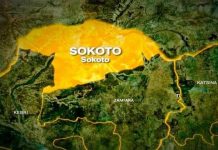




In what is shaping up to be a deepening power struggle over the soul of Kano’s traditional institution, two different Galadiman Kano titleholders were turbaned on the same day, May 2, 2025 — one by Emir Muhammadu Sanusi II at the Gidan Rumfa palace, and the other by Kano 15 Emir Aminu Ado Bayero at the Nassarawa palace.
This development, unprecedented in recent history, adds a fresh layer of complexity to the already tense tussle over the Kano Emirate.
One title, two turbanings
The title of Galadiman Kano is one of the most senior and historically significant in the hierarchy of the Kano Emirate Council.
Traditionally, the Galadima serves as a key adviser and sometimes a custodian of succession dynamics.
Following the death of the last Galadima, Abbas Sanusi, a vacuum was left that both emirs have now attempted to fill — separately.
At Gidan Rumfa, Emir Muhammadu Sanusi II, recently reinstated by Governor Abba Kabir Yusuf through a legislative repeal of the 2019 emirate law, conferred the title on Alhaji Munir Sanusi Bayero.
Present at the event were top government officials, traditional titleholders loyal to Sanusi, and a crowd of supporters who view the reinstated emir as the rightful occupant of the Kano throne.
Simultaneously, at the Nassarawa palace — a location that has become the base for dethroned Emir Aminu Ado Bayero — a parallel turbaning ceremony took place.
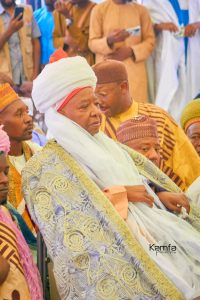
There, Alhaji Sunusi Lamido Ado Bayero, son of the late Emir Ado Bayero, was installed as Galadiman Kano by Emir Aminu.
That turbaning, too, was witnessed by traditional titleholders and loyalists from the rival faction.
Politics at the heart of tradition
This dual turbaning is not just about royal titles — it is about legitimacy, symbolism, and the broader question of who truly leads the Kano Emirate.
Emir Sanusi II’s reinstatement in 2024 was a political decision executed swiftly by Governor Yusuf, who has remained a staunch supporter of Sanusi.
Yet, Aminu Ado Bayero has refused to step down quietly, maintaining a parallel court and receiving continued symbolic support from federal power structures.
What the rival Galadima turbanings illustrate is that the emirship conflict is now moving beyond palace walls and symbolic gestures.
With both emirs making appointments to the same title, it sends a strong message to the public and political class: this is not just a ceremonial contest — it is a live battle over control, influence, and the legacy of one of Nigeria’s most important traditional institutions.
Implications for Kano and Nigeria
The impact of this dual claim could be far-reaching.
For the people of Kano, it may sow confusion about which emirate appointments carry legal and cultural weight. For the traditional system, it is a clear indicator of how deeply modern politics can fracture age-old institutions.
And for Nigeria, it represents a cautionary tale: where state power intersects with tradition, legitimacy becomes a contestable terrain.
If both emirs continue to act in full regal capacity, it could force a judicial resolution — or even federal intervention — to settle the matter definitively.
Until then, Kano remains a city with two Galadimas and two emirs, each drawing from different wells of loyalty, law, and history.